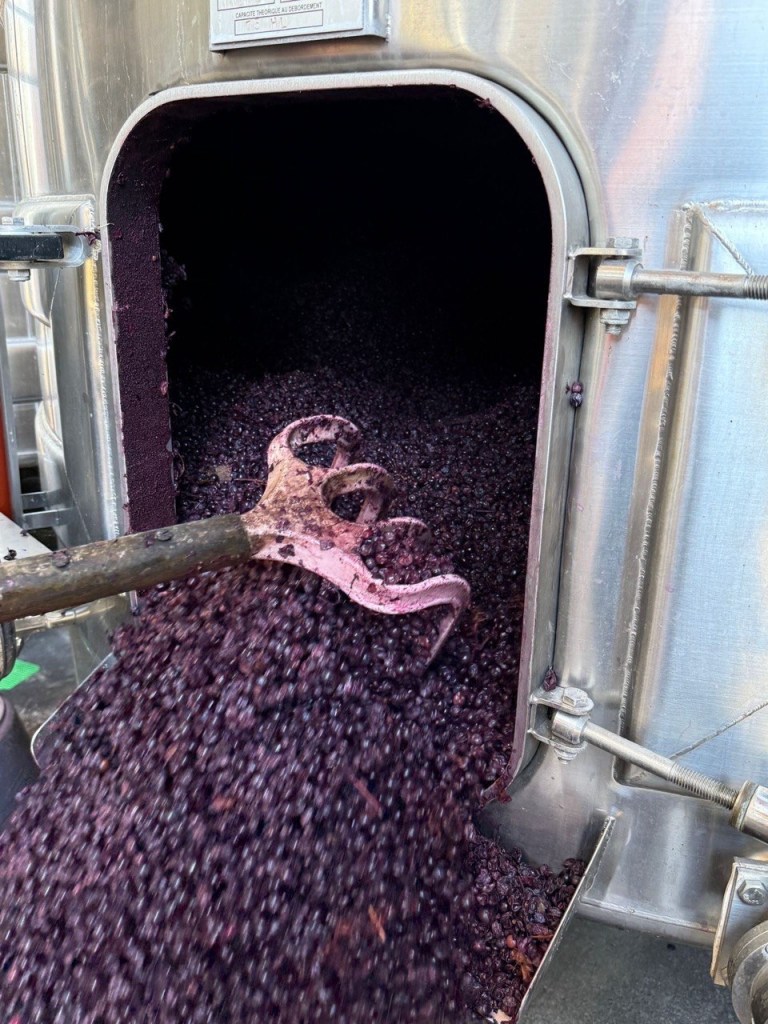

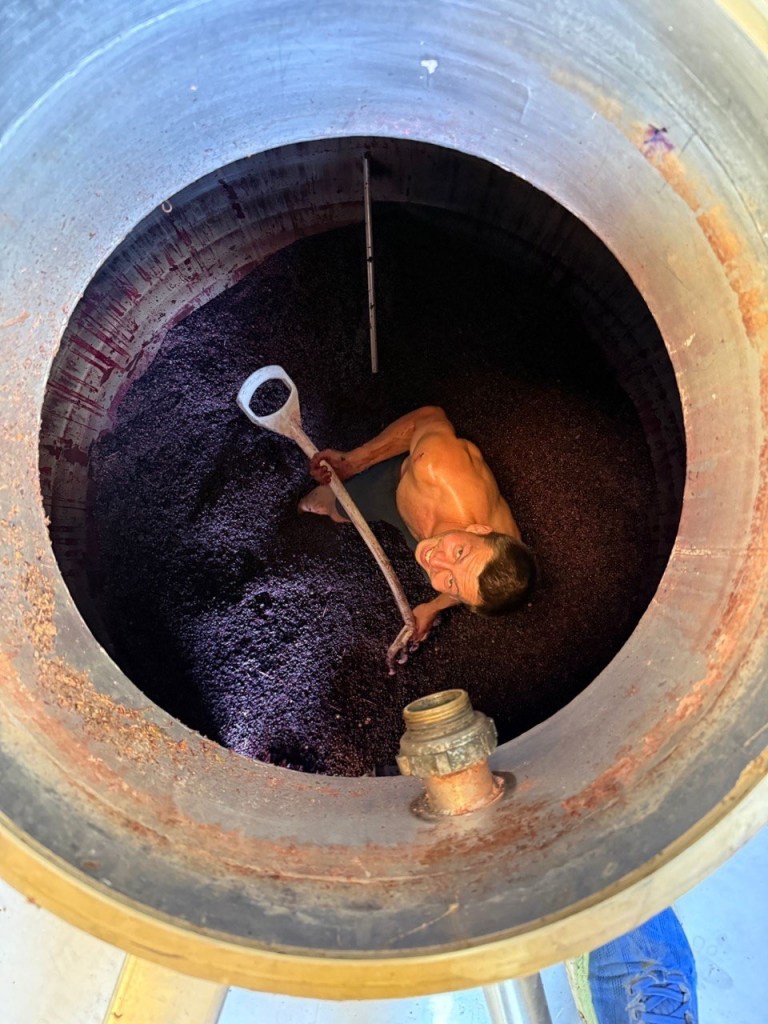
Imagine being knee deep in warm slippery mush. You are inside a metallic cylinder, three or four steps between walls. But careful: the floor is inclined and it’s easy to slip. The walls of the cylinder are decorated with layers of velvety crystallised stains, blackened as dry blood. A few niches within the curved wall and pipes, pointing towards the centre, are decorated with fuzzy versatile piles. Similarly to the mush you’re standing in, these piles are loose, runny and unruly. In the semi darkness of the tank, the purple mass reveals the occasional glimpses of what it was a week ago: Merlot grapes that are now mostly peel and seeds.
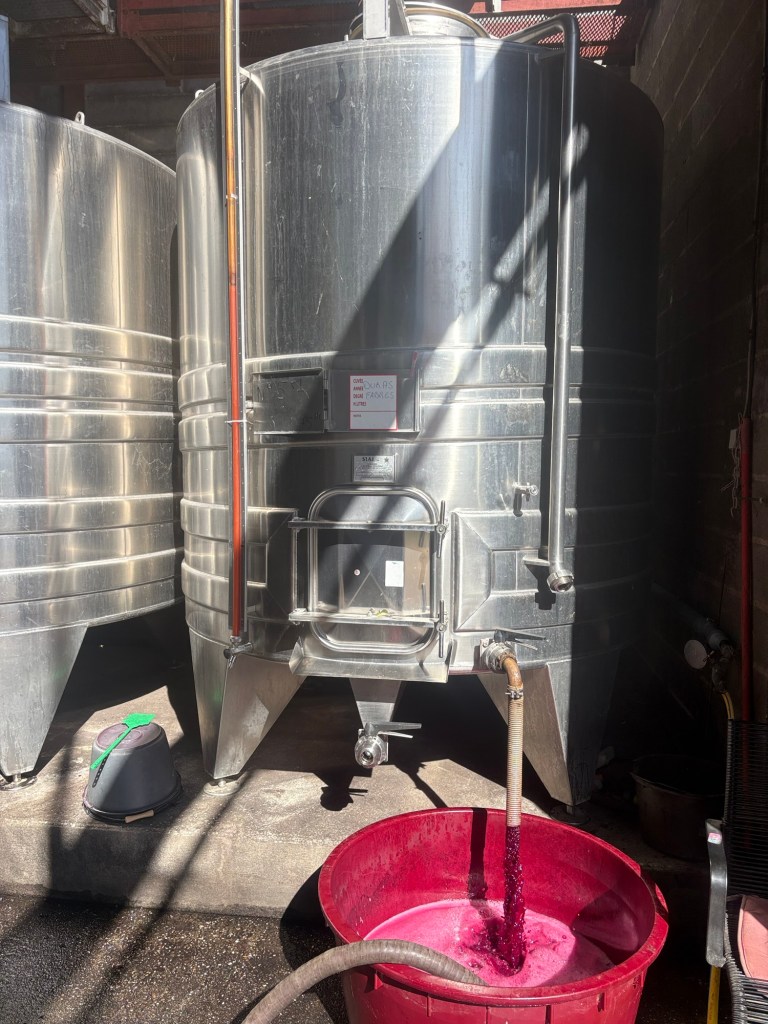
There is little time to register the described details – not only because you are breathing dense aromatic alcohol, but because you are in the thick of an intense exercise: the fermentation byproduct need to be swiftly evacuated and the tank washed. You are frantically working with a large fork (just like the garden one but plastic) and occasionally with a pressured water hose, passed to you through a side hatch. Unlike white wine (which is pressed and relieved of solid byproducts before loading into tanks), red wine ferments with the seeds, skin, and occasional grasshoppers that were unfortunate to fall into the rubber sleeves of a delicate and thorough automated harvester – the machine à vendanger. Based on the wine’s density readings from this morning, the yeast have eaten all of the sugar, indicating that the fermentation is over: the precious liquid will now be transferred to a smaller tank that can be moved to a bottling facility.
Prior to sending you into the fermentation tank (la cuve) to become briefly but holistically, corporeally drunk, a burning candle is placed there. Though appearing as a religious rite, this has a very pragmatic purpose: to test if most of the heavy bacteria-produced CO2 has been replaced with light oxygen, so that it is safe to send someone in. If the candle burns, you live. If it goes out – better to wait for longer. Only after this test you can crawl in through a small window-sided hatch.
Pouring down your chest and legs (minimal clothing is worn inside the tank), your sweat will make it to the dinner table as a fraction of the elixir inside the bottles. You (or me perhaps!) will be part of vendange 2026, light, intricate and aromatic, but unusually sweet due to a dry droughty summer.
Exiting the tank, brings you back into the reality of the vineyard, the nearby farm animals, the jolly comrades. The moist and warm intensity of the tank made you forget this external world. Doing a shift inside a cuve is a memory that’s likely to stay for the rest of your life.