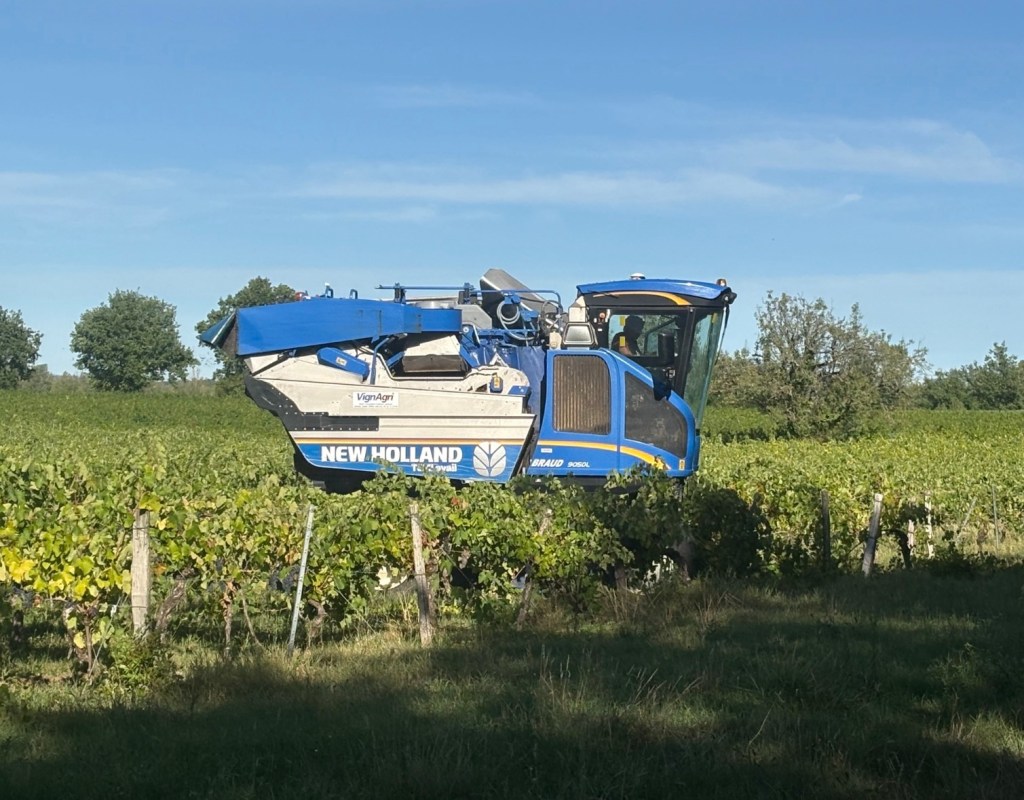
Almost 40 years ago, my grandfather (who I’ve never met), stayed at a vineyard near Lagrave in Southern France. As a journalist from the Soviet Union, he described how through hard work and help of advance machinery, a French farmer, Alain, and his wife Martine do work equivalent to 40 soviet peasants. Today I’m at the same vineyard with the same farmer, to look at some of the machines that enable the efficiency that astonished the provocative and curious soviet writer who was my grandfather Marc.
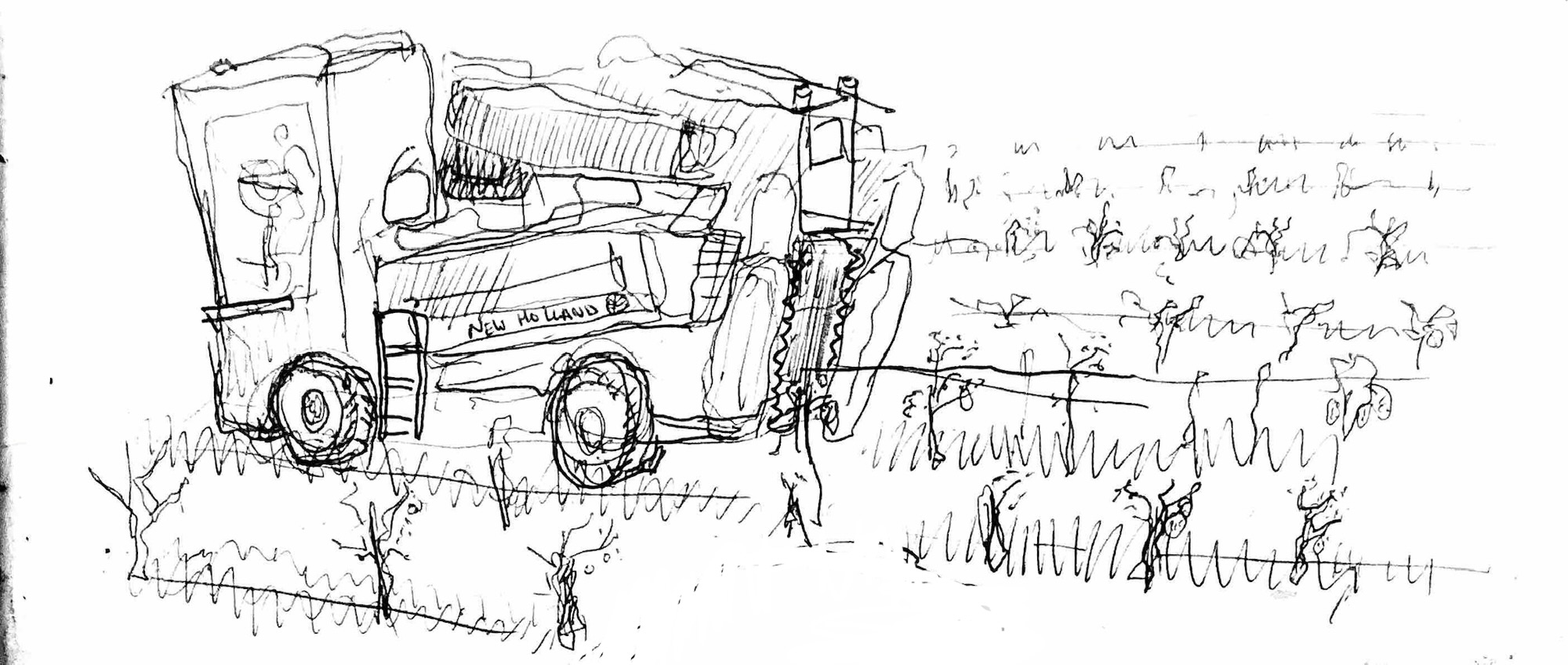
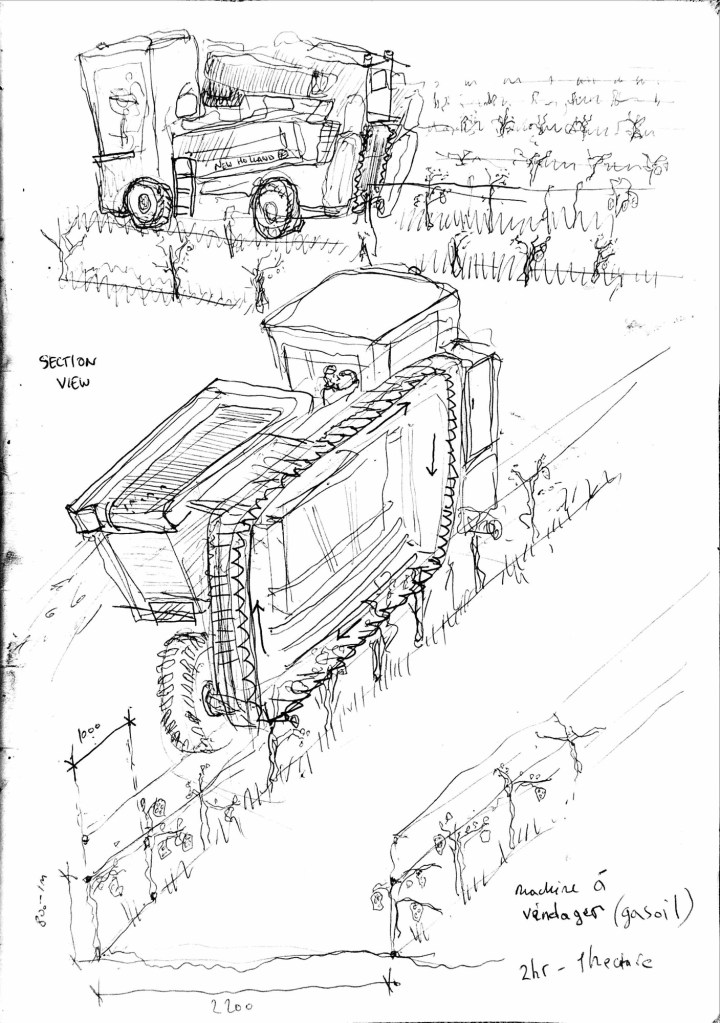
The making of wine is a streamlined scientific process. The vine trunks are attached to cables at 80 and 100cm above ground, spaced by 1m and with 2.2m between the rows. The grape harvester (machine à vendanger) is hollow inside: plastic bars gently shake the vines and grapes fall into the rubber sleeves. The sleeves form two chains, either side, that lift the grapes to the top of the machine, where the leaves are filtered out and the grapes are assembled to be dropped into a tractor, when the machine is full.
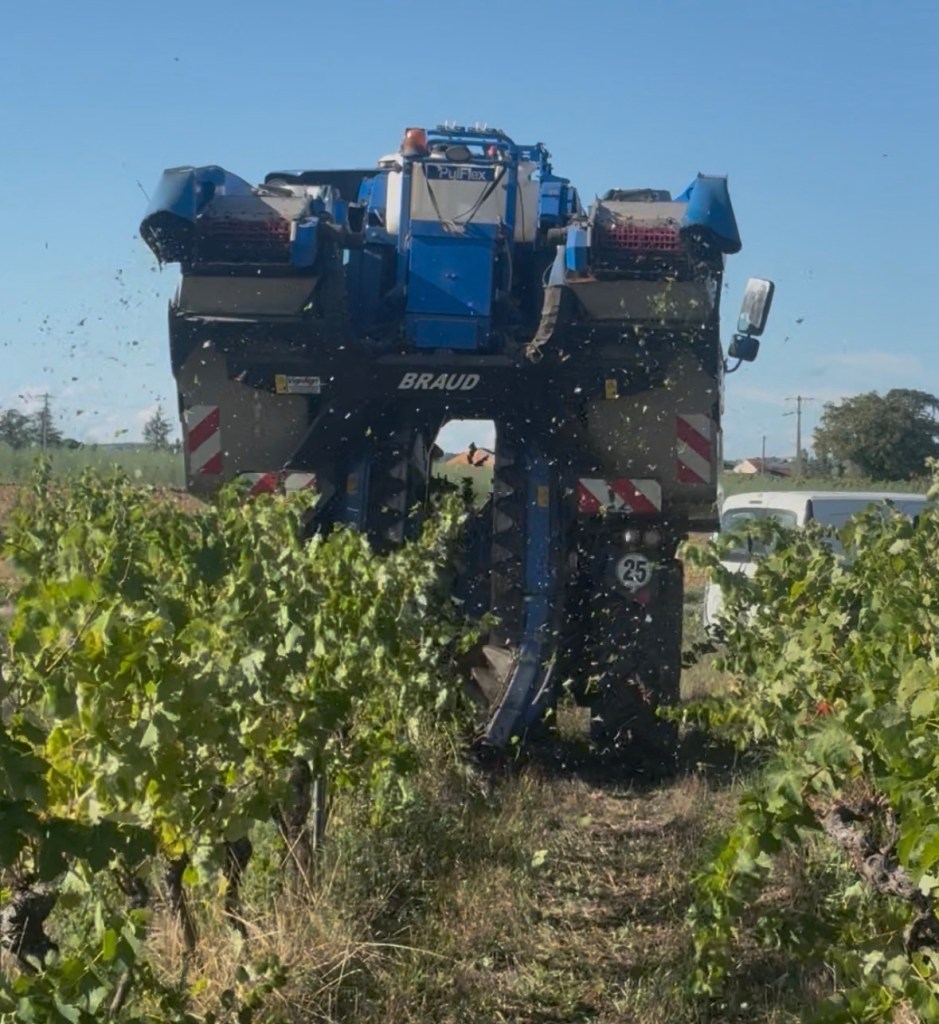
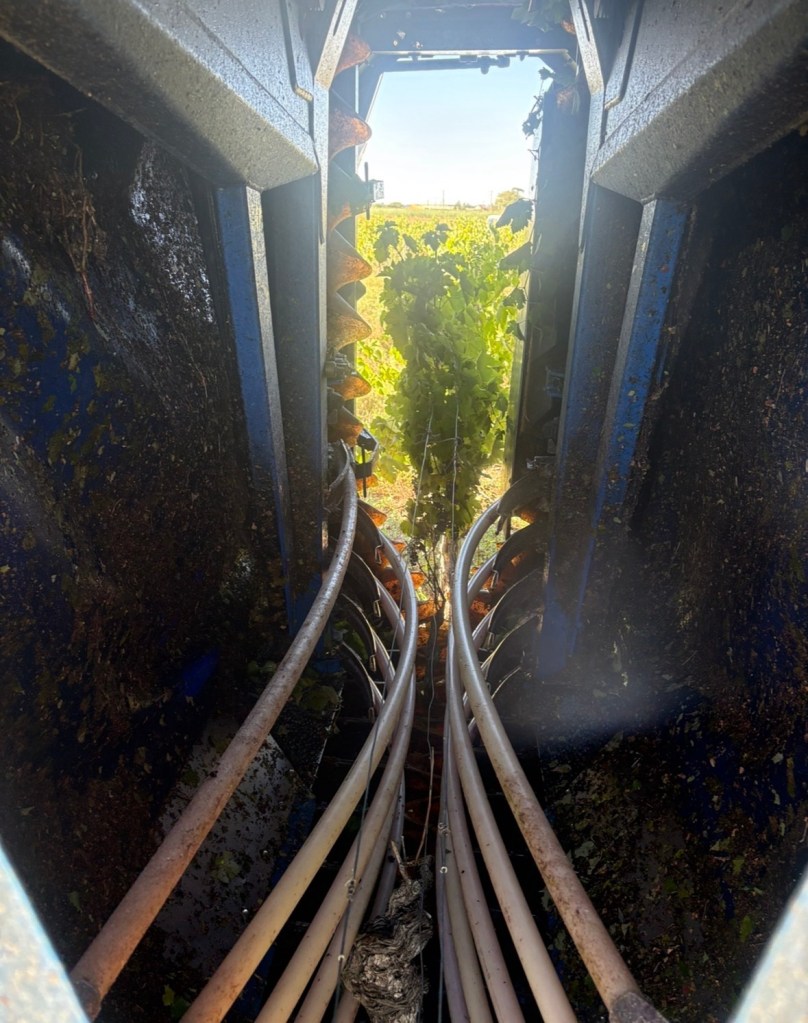
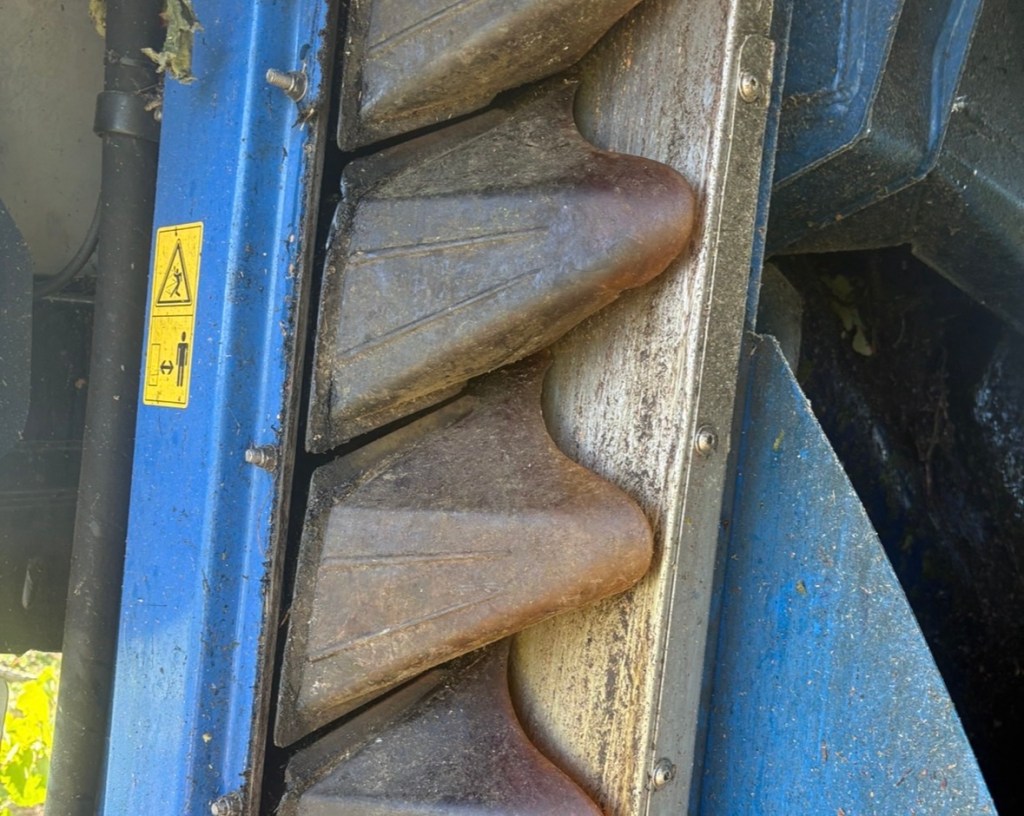
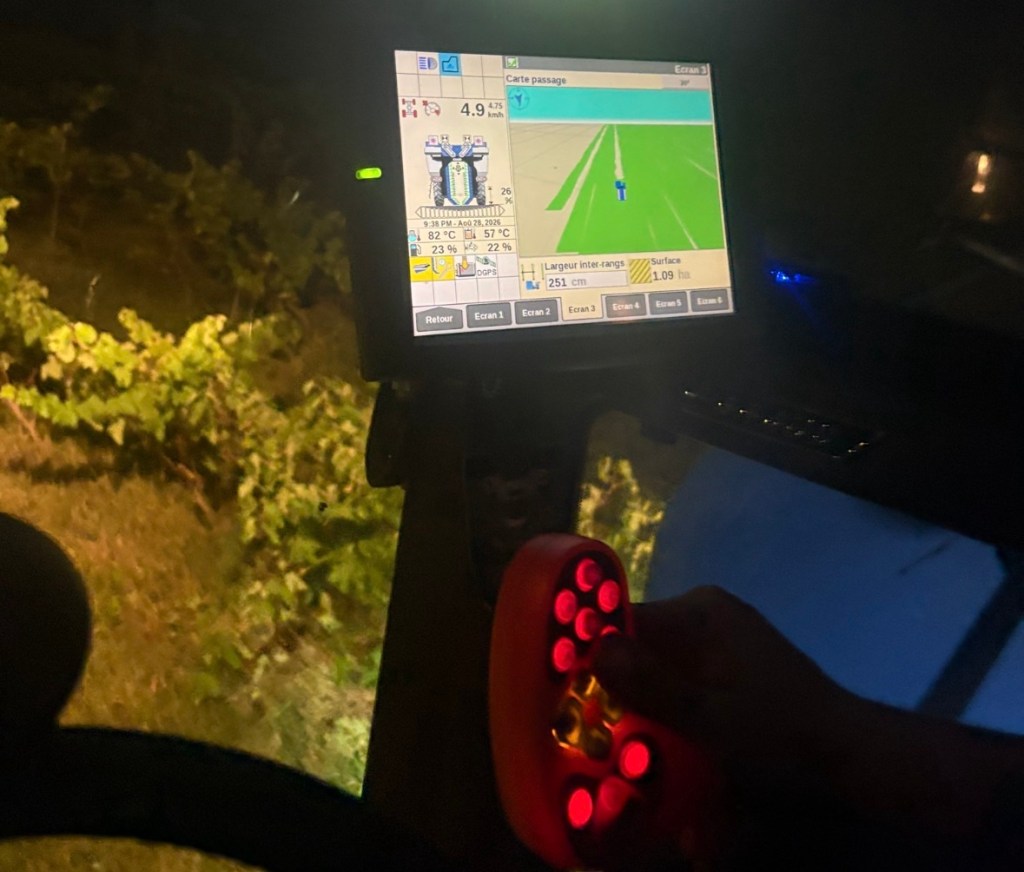
Being 4.5m tall, the harvester has 3/4 of its weight in its upper half. Given the risk of falling sideways the onboard computer instructs the driver when to shift the centre of gravity (by pressing buttons with arrows) to a different side, to prevent falling sideways. The computer and cameras also help monitoring the centrality of the machine over the vine and the harvester’s overall trajectory within the vineyard.
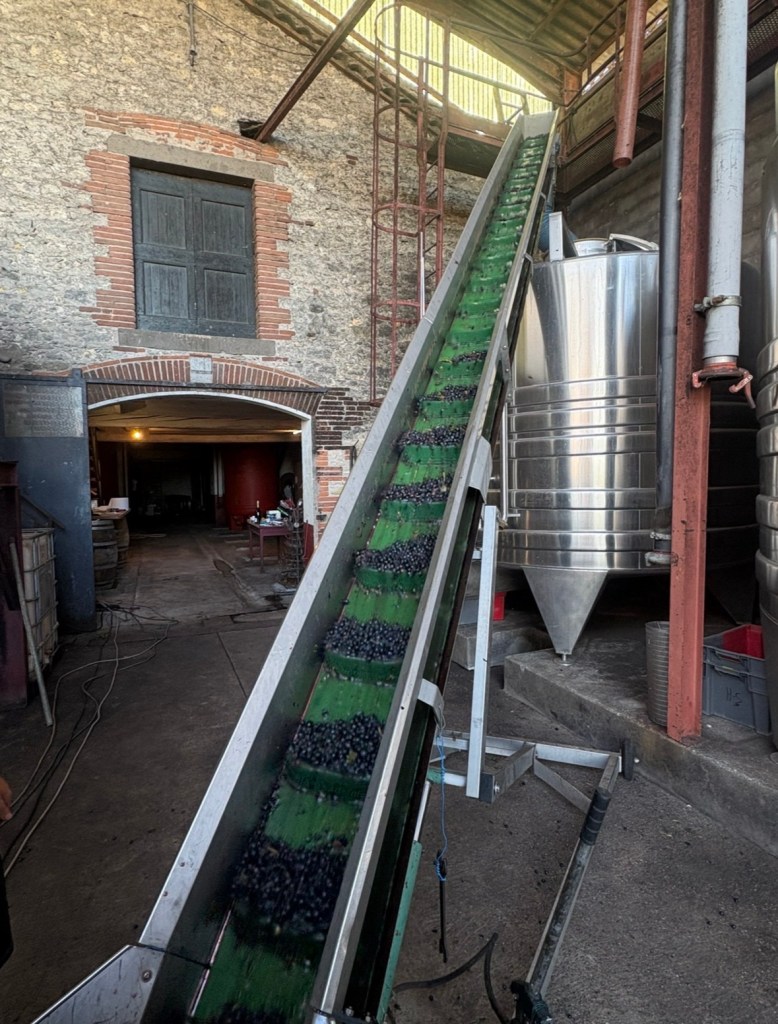
After the harvest, the grapes are loaded into a tractor, which transports them to a conveyor belt that lifts them into a cistern (cuve) where fermentation will take place. Each of these subsequent stages merit a standalone blog post, but for now I dwell on the 10 tonne, 4.5m giant harvester: the concurrent cognitive simplicity and technological complexity of gently shaking vines and foraging the grapes, and the many generations of innovation that have transformed the millennia-old process.
Meeting the machine’s early predecessor 40 years ago, my grandfather was amazed at its ability to replace fifteen grape pickers. Sitting on the edge of the vineyard, i watch the sunset to the deep scratchy humming of the machine à vendanger which is now digging its powerful headlight beams into the fuzzy green strips. Waiting for the tractor loading on this cool and fresh August evening (the workday won’t finish before 10:30pm) I reflect on my grandfather’s comparison between Soviet and French approaches to agricultural work: flags and songs vs quiet, technologically assisted hard work. Eight odd generations of grape harvesters stand between what I see now and what a curious Soviet journalist witnessed in the late 1980s: sophisticated adjustments to the tapping of the bars, blowing out the leaves and carefully assembling the berries.


1 Comment