
Reflections on Respectful Disposal exhibition ( Manchester / 25-26 July 2026 )
Over the weekend of 25-26 July 2026 I had my first solo art/research exhibition, hosted by Saan1 and supported by Sustainable Futures and the Tyndall Centre. Rather than the quantity of the attendees (132 which is just about what the gallery could fit during the 12 hours) way more important was the quality of the visitors, their engagement with the work and their personal responses. I had an overwhelming amount of emotional, creative and constructive reflections, which will take me weeks to process. Below are some images and details about the display.

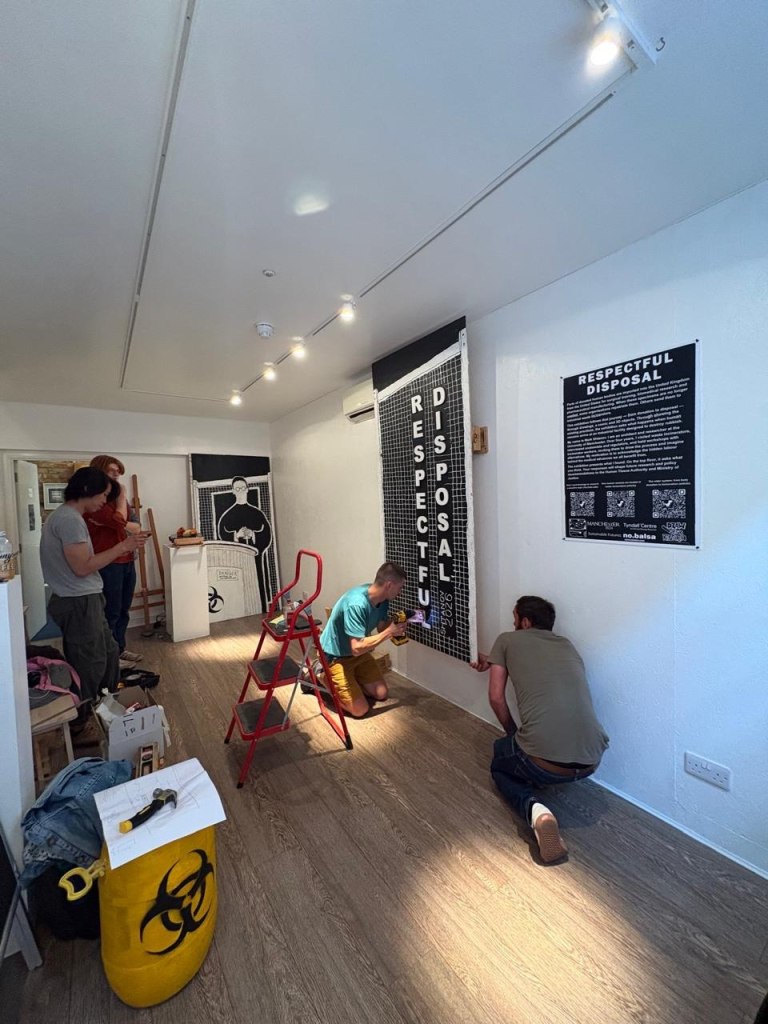
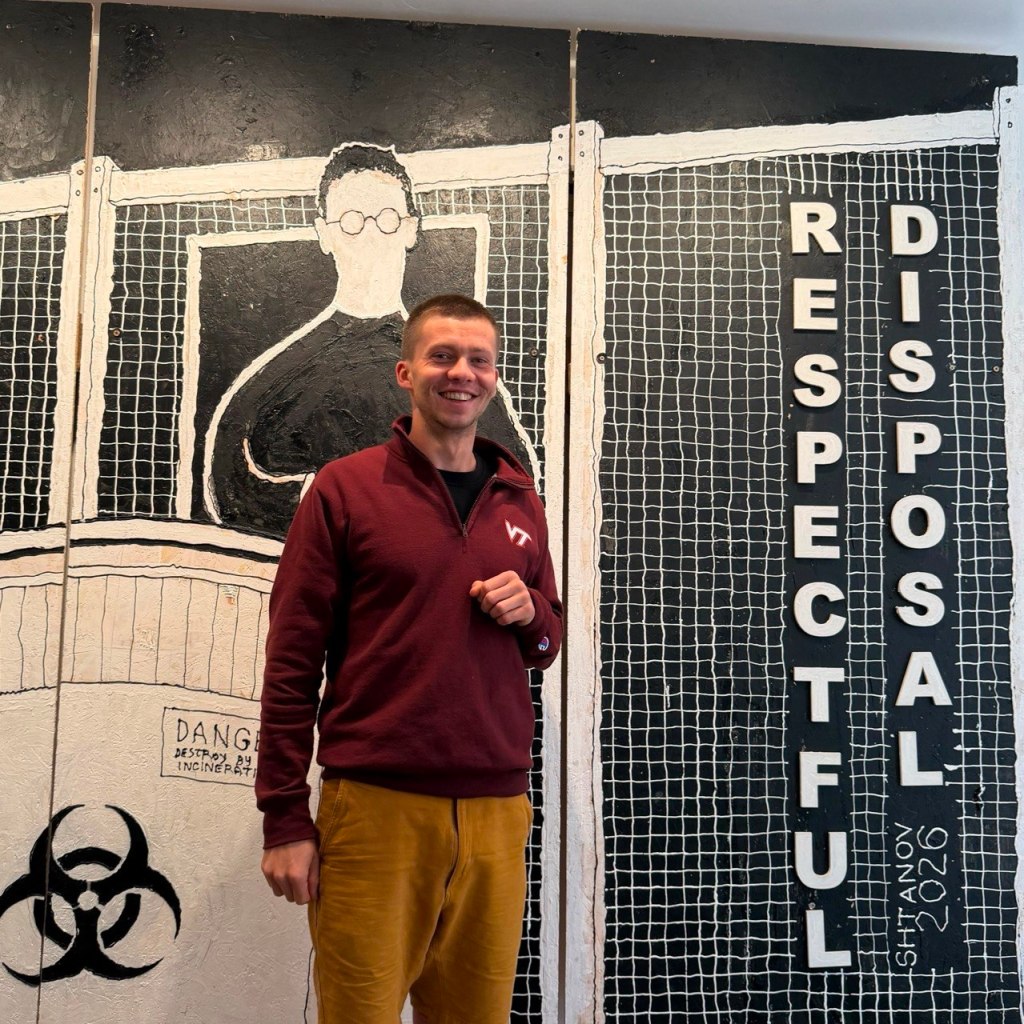
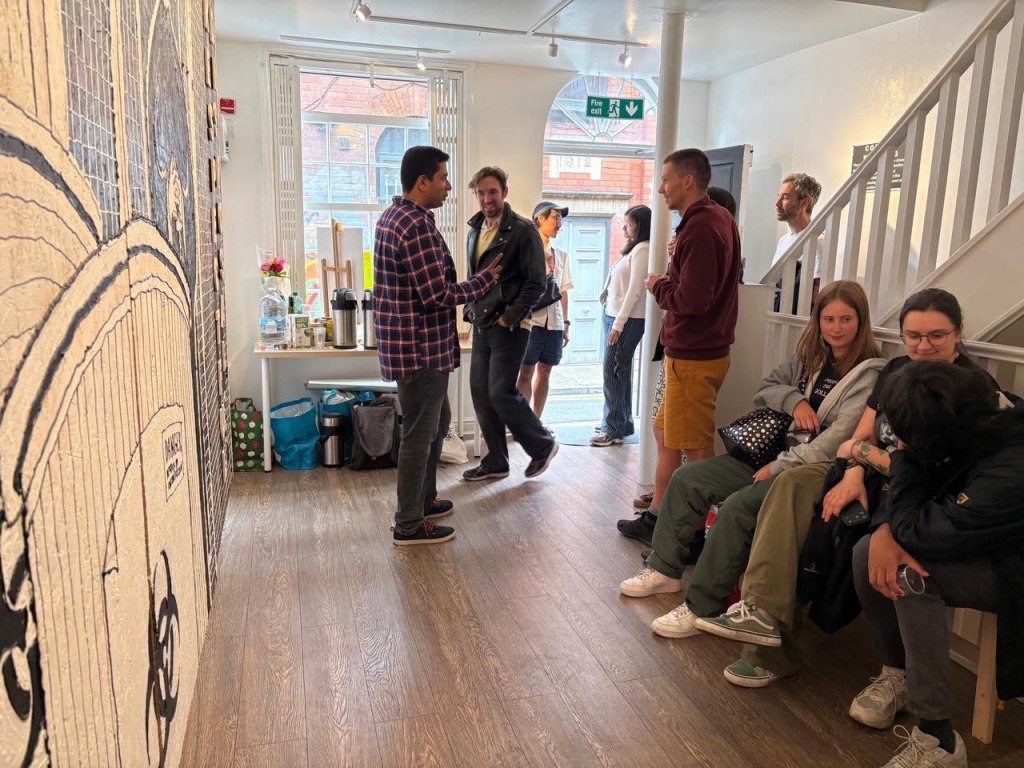
The exhibition begins at the ground floor with the overall information, large artwork (acrylic paint on OSB board), and a map of what to expect at the other floors. Prior to going upstairs, a visitor is warned about the sensitive content of the display.
At first floor (images below), the boards tell the story of the body: from donation to incineration, with all intermediate stages. Suspended from the ceiling on fishing lines, nine panels are made three-dimensional through the use of foam extrusions. At the point where the body leaves the biomedical domain and becomes waste, the room is notionally divided by a threshold and different colour of lighting. At this point, the visitor also encounters the large 200-litre drum, suitable for incinerating the torsos.
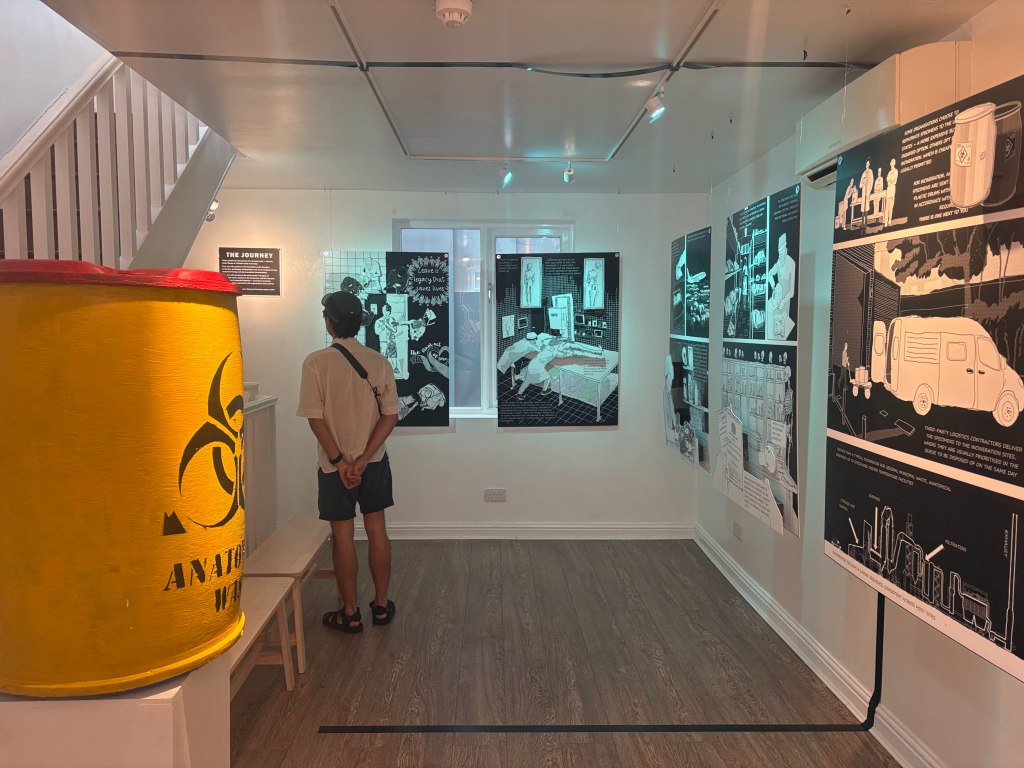

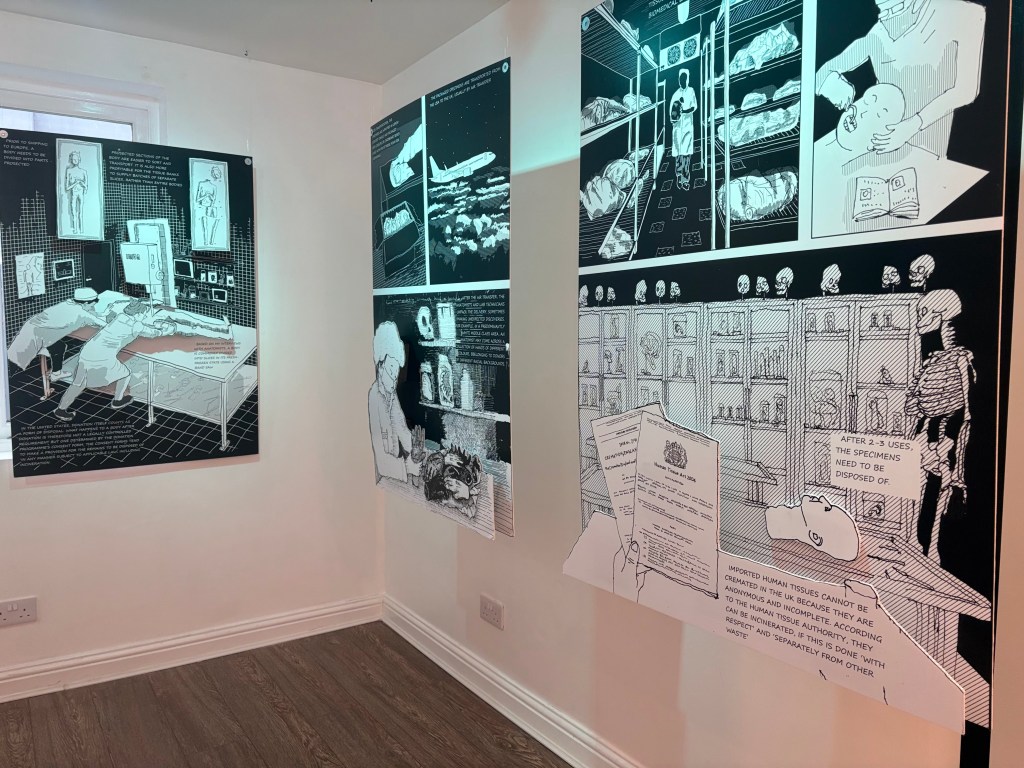
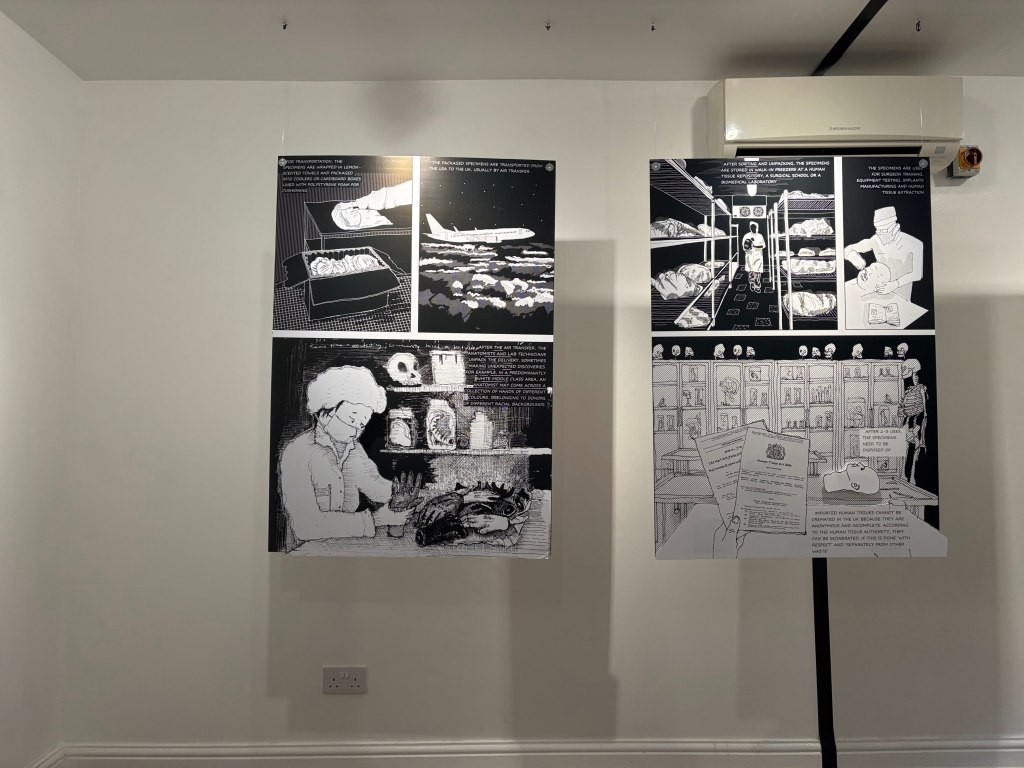
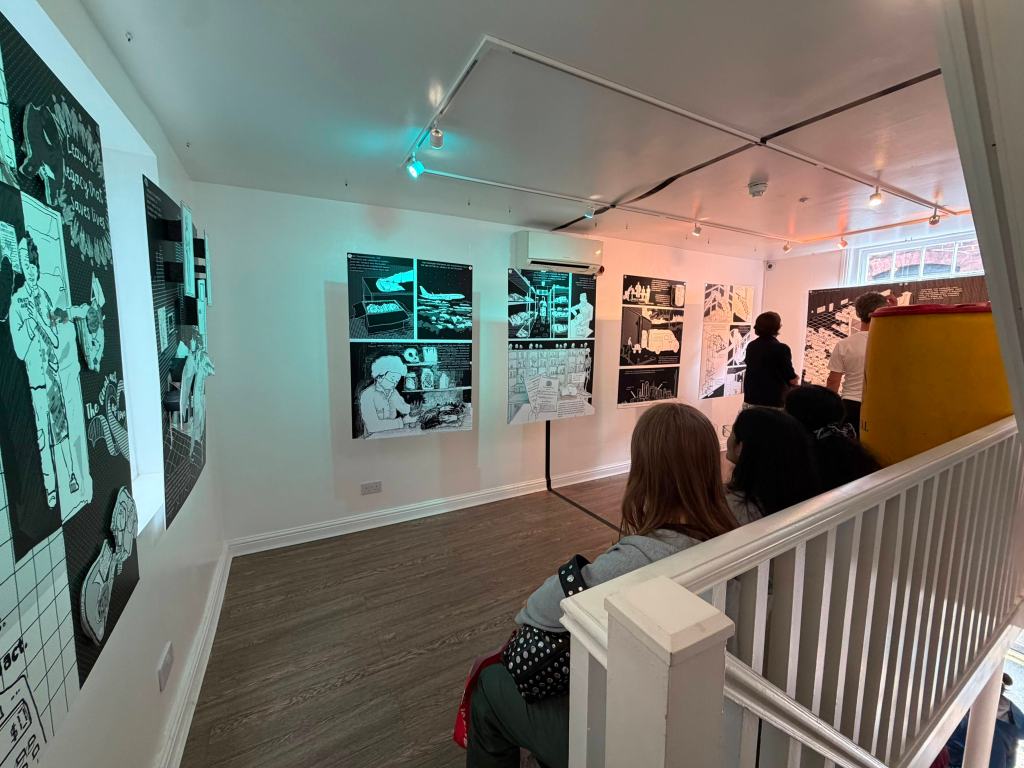
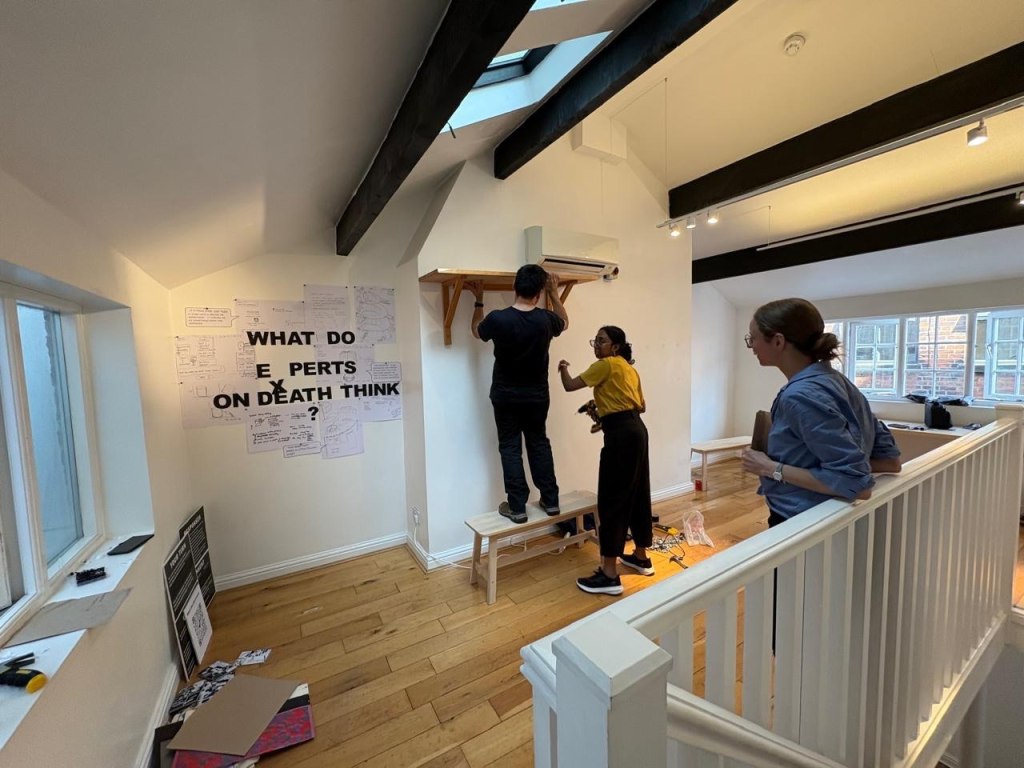
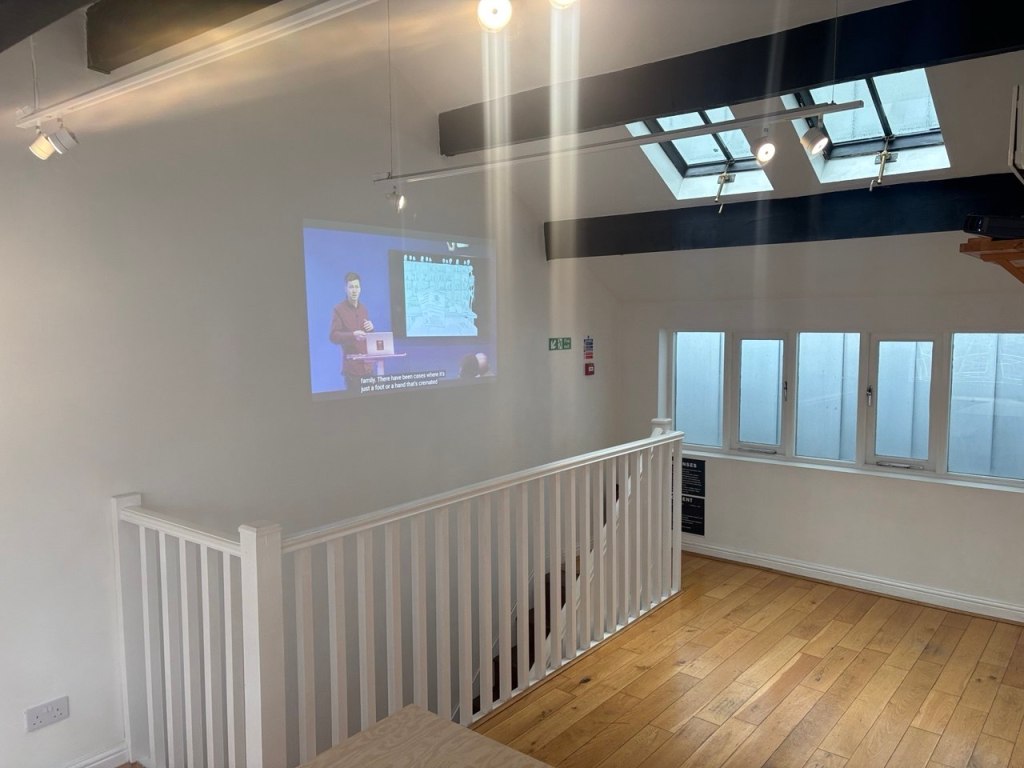
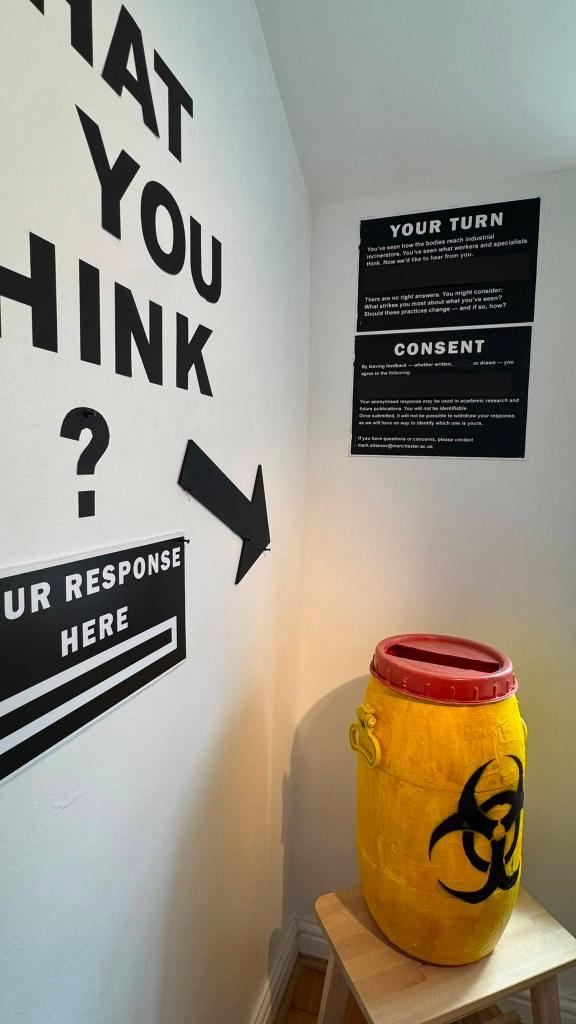
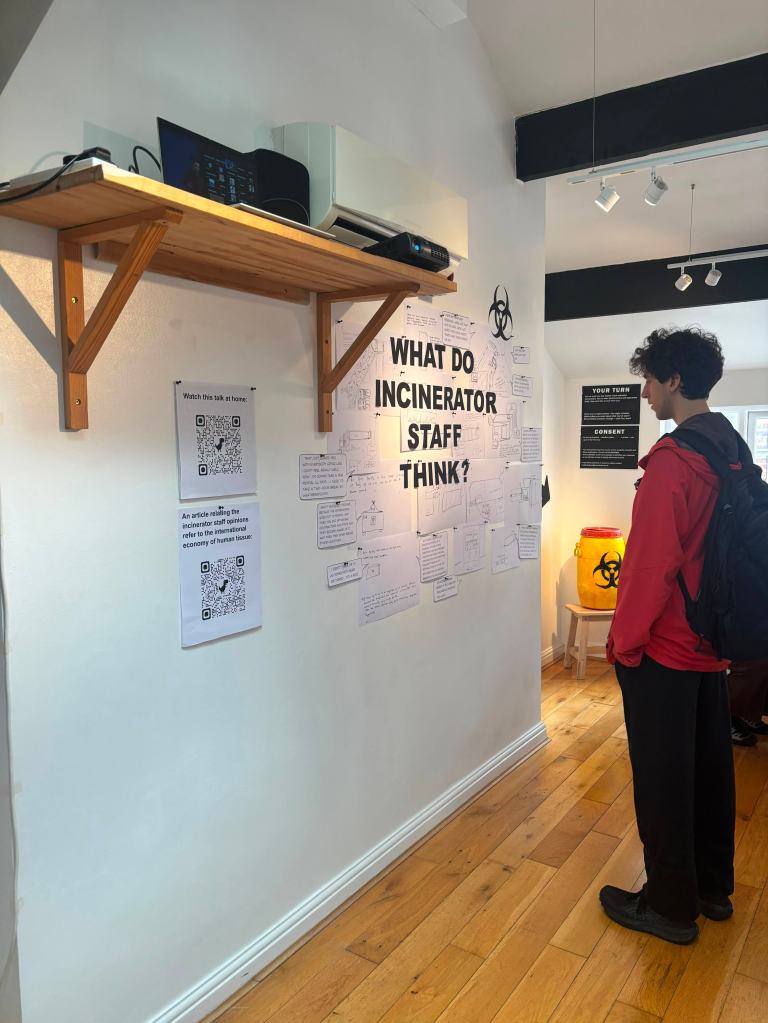
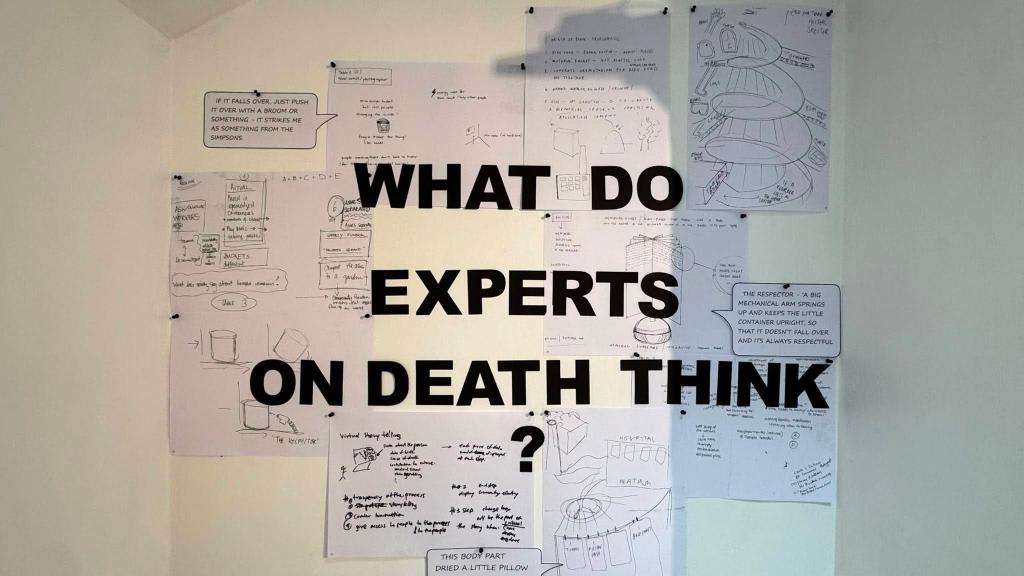
The second floor (images below) takes the visitor through the spoken, written and drawn reflections by waste workers and death specialists – two participant groups i worked with. Whilst encountering these reflections, the visitor also gets glimpses of the video talk, showing a wider range of drawings and featuring challenging questions, asked by Science and Technology Studies (STS) academics last December at Virginia Tech. At the end, a visitor has a chance to provide written and drawn reflection on how they feel, and what surprised them. The responses are dropped into yellow drums, similar to those used for anatomical waste at the incinerators.

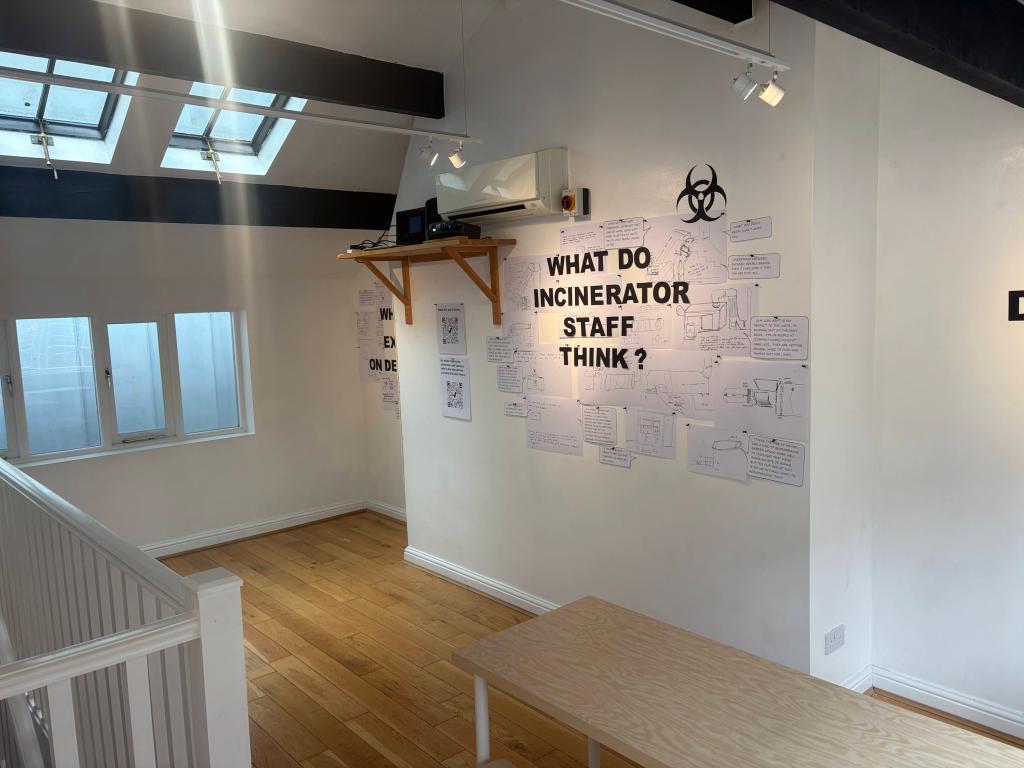
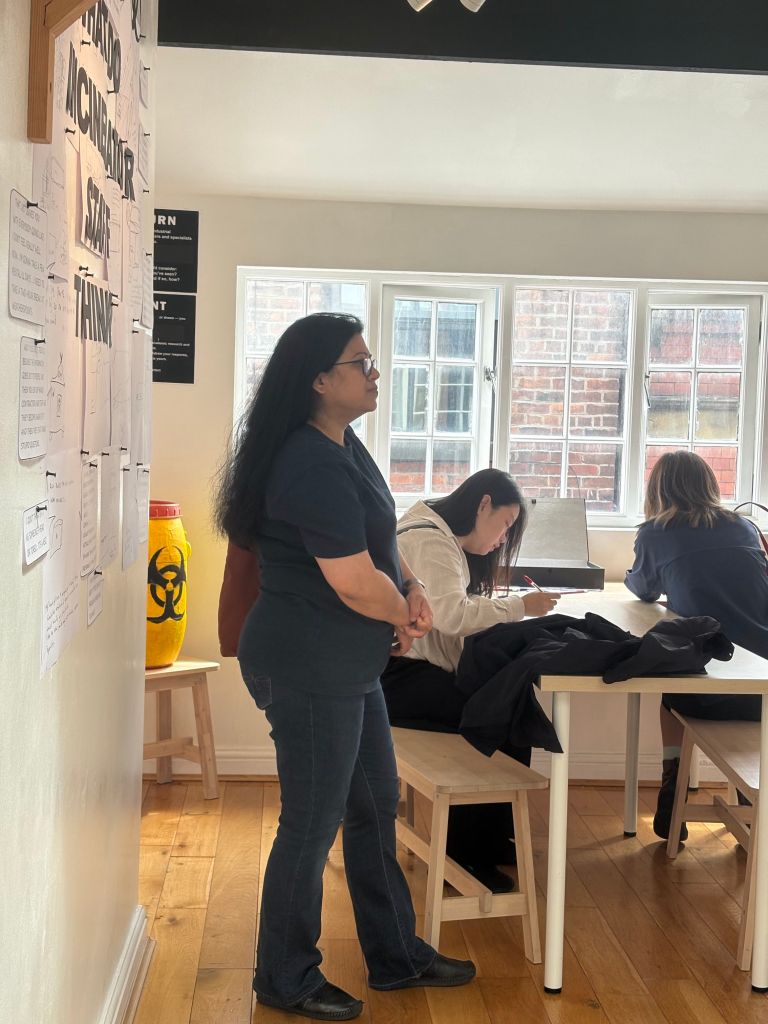
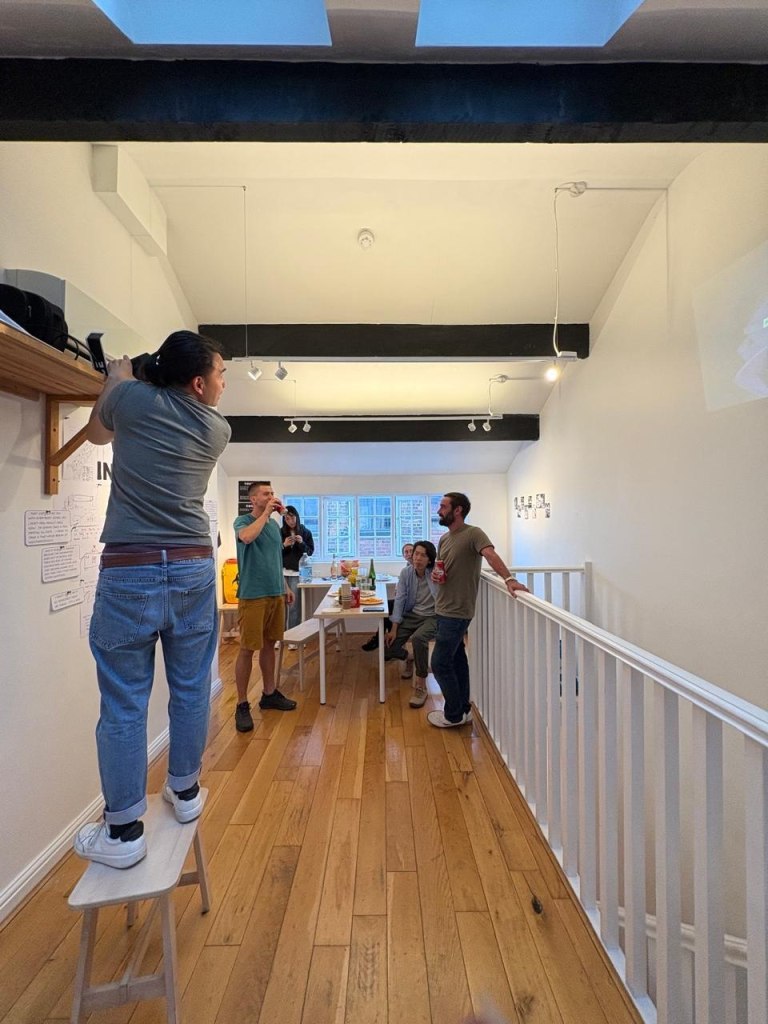
Having seen the full exhibit, the visitors return to the ground floor to discuss their experience and have refreshments. Throughout the show i was stationed at the ground floor to field questions and hear the first impressions.
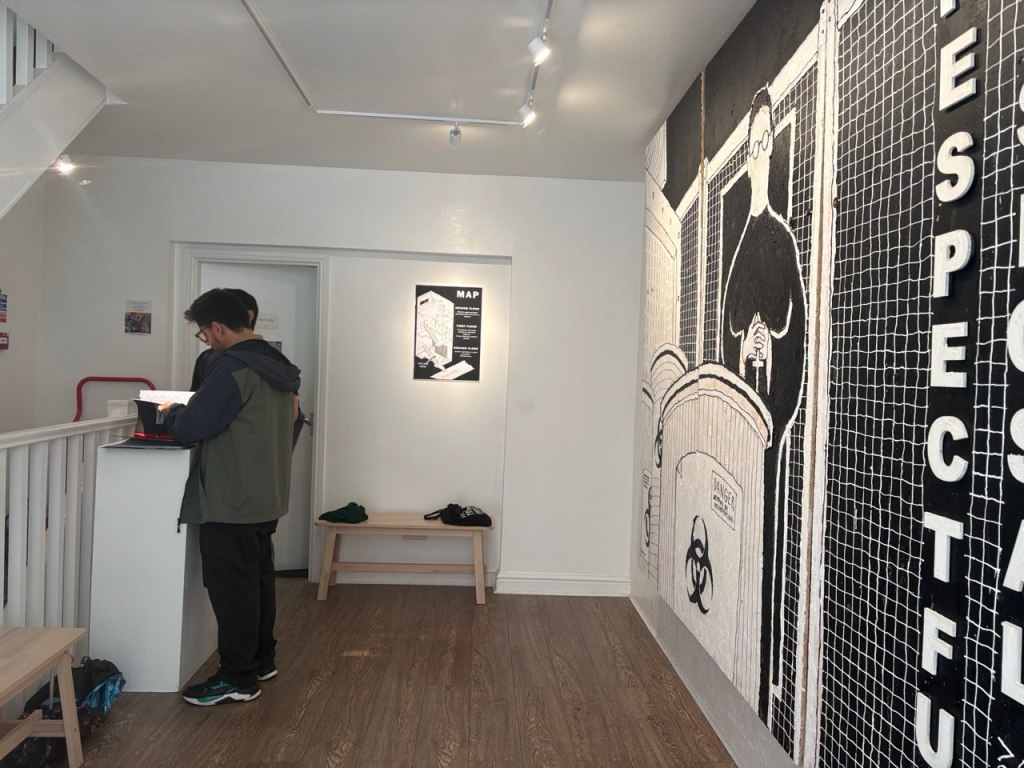
Although well attended in terms of numbers, the quality of the exhibition’s attendance was exceptional. The visitors left detailed personal reflections and drawings that touched me and offered motivation to broaden and deepen the research.
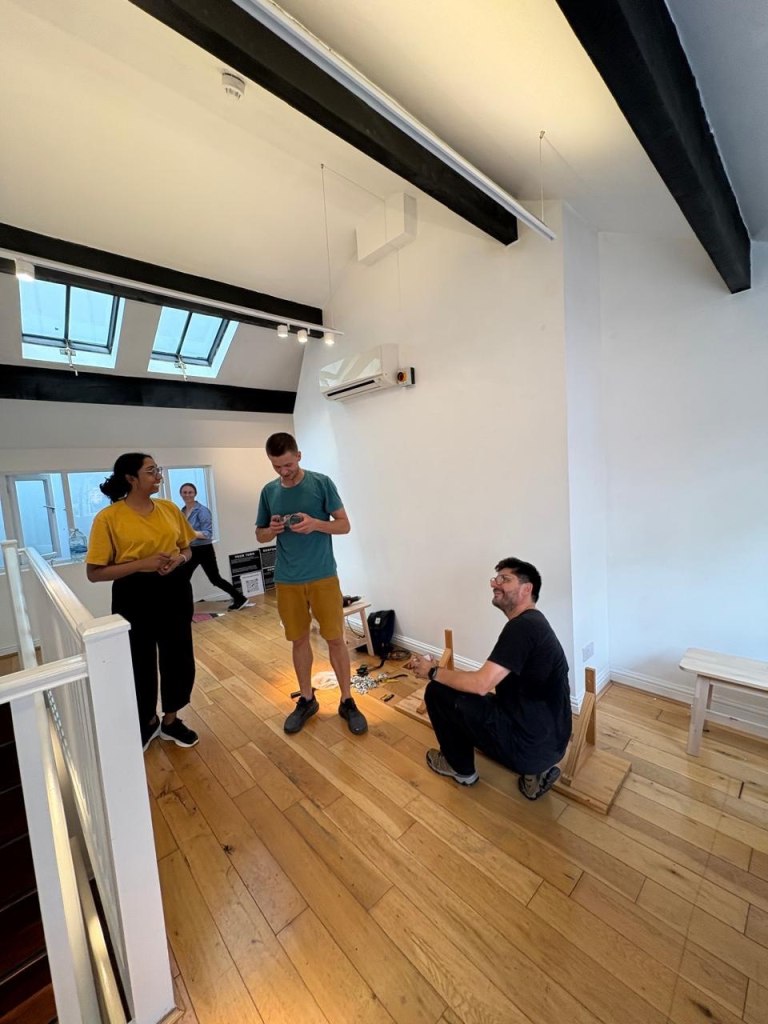
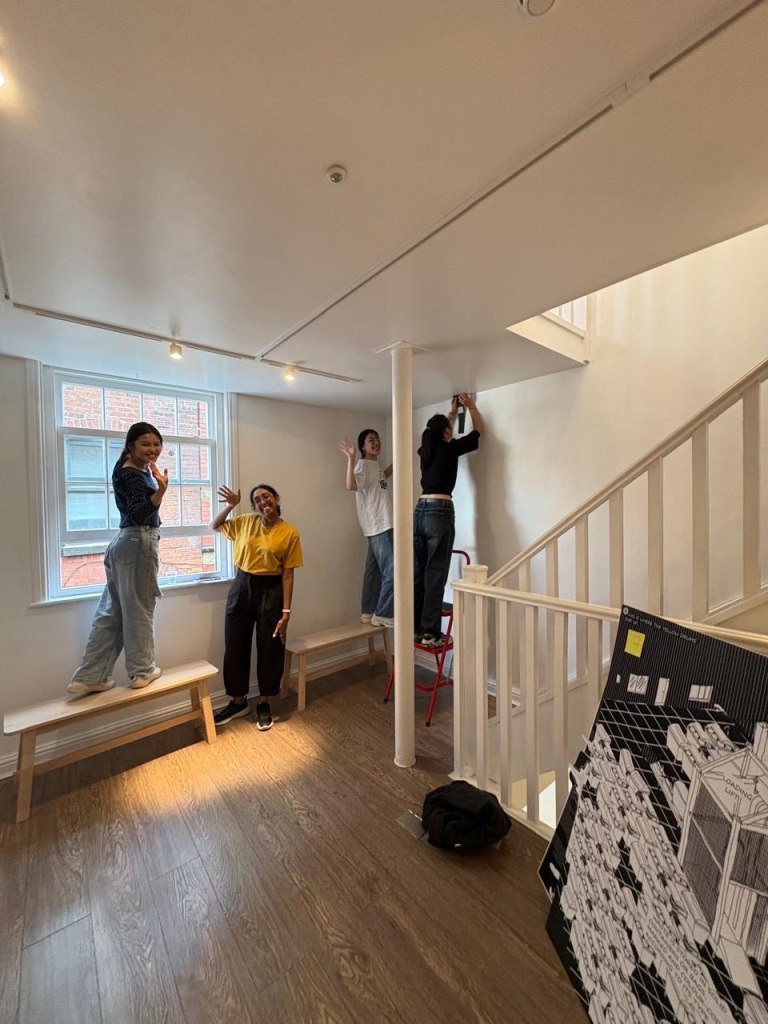
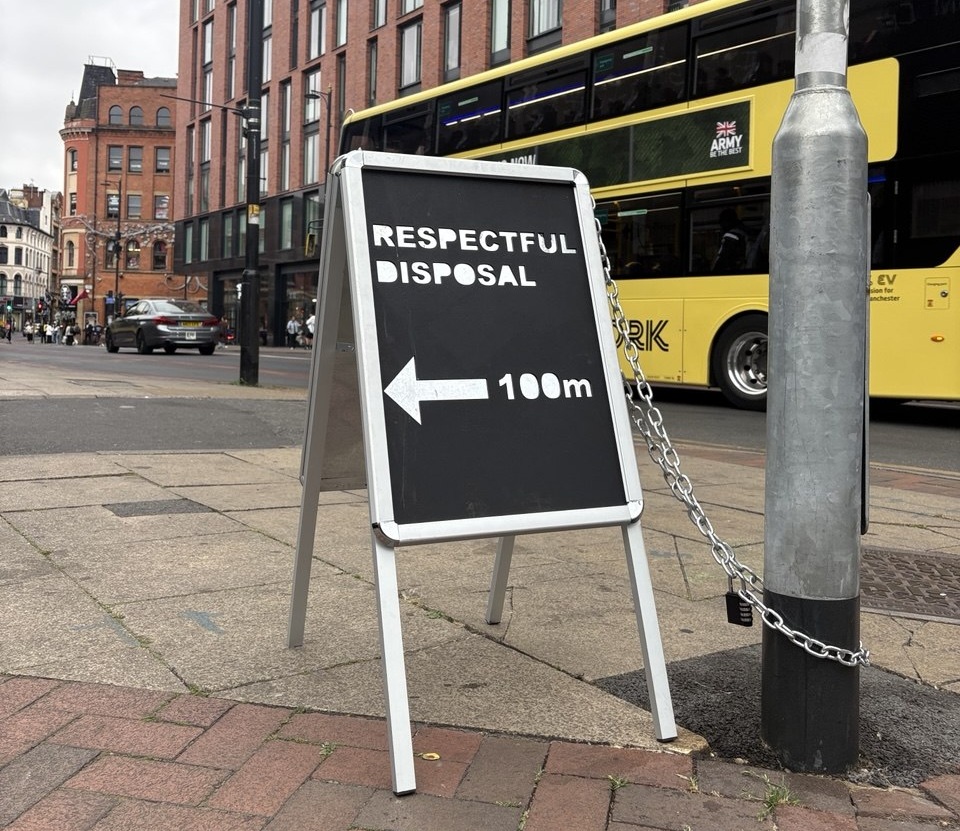
What was also exceptional is the help received from family and friends. I am grateful and indebted to my mum and a group of friends that tirelessly carried heavy things, drilled ceilings and walls, hung shelves and OSB boards, put stands on the street, and enjoyed a celebratory glass.