
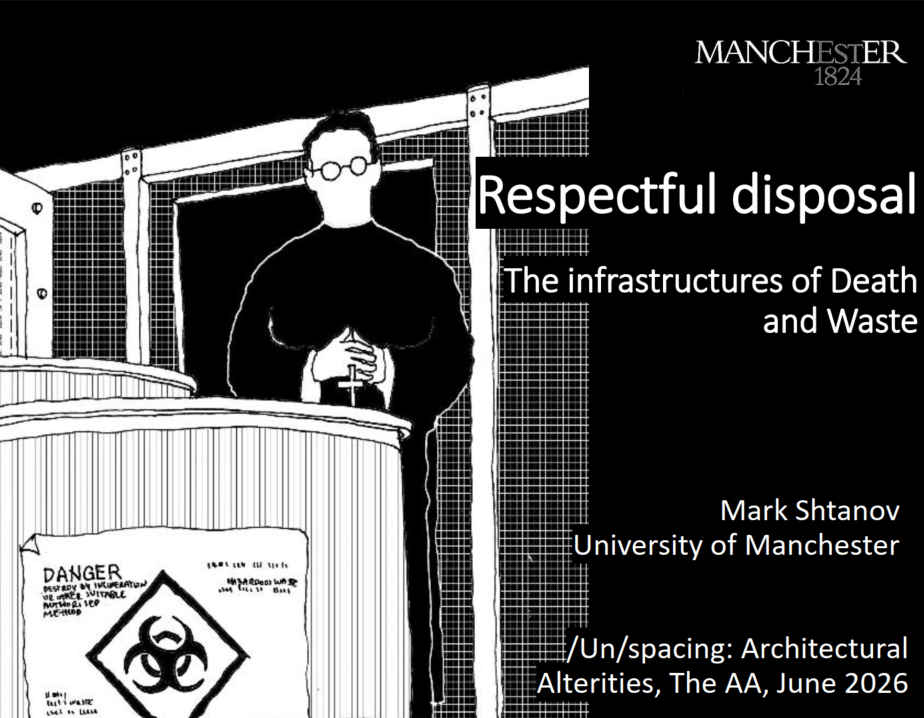
Earlier this month I delivered a seminar to PhD researchers and academics at the Architectural Association in London. The talk was mostly shaped by my research project around Respectful disposal, previously discussed in the Virginia Tech talk and two articles (Shtanov, 2025, 2026). The follow-up discussion, however, revolved around translating the concept of respectful disposal to demolition of buildings and decommissioning of infrastructures. From the speaker’s position, the follow-up discussion was more interesting than the talk itself…
At the end of the session we discussed how my study of the industrialised rituals of respect towards dead bodies can be translated onto demolition (or deconstruction) of buildings. Building on Michael Thompson’s (2017) Rubbish Theory and Dan Robins’s (2024) analysis of UK crematoria, my thesis discusses how remains are imbued with several types of value: financial, moral or scientific, emotional, environmental. Only when the body loses all of these value types (sometimes through their deliberate removal), it can be written off as incinerable waste (Shtanov, 2026). Because the valuable status of something is a social construct, the absence of value needs to be demonstrated for the involved stakeholders to buy into the absence of value and the bestowal of redundancy.
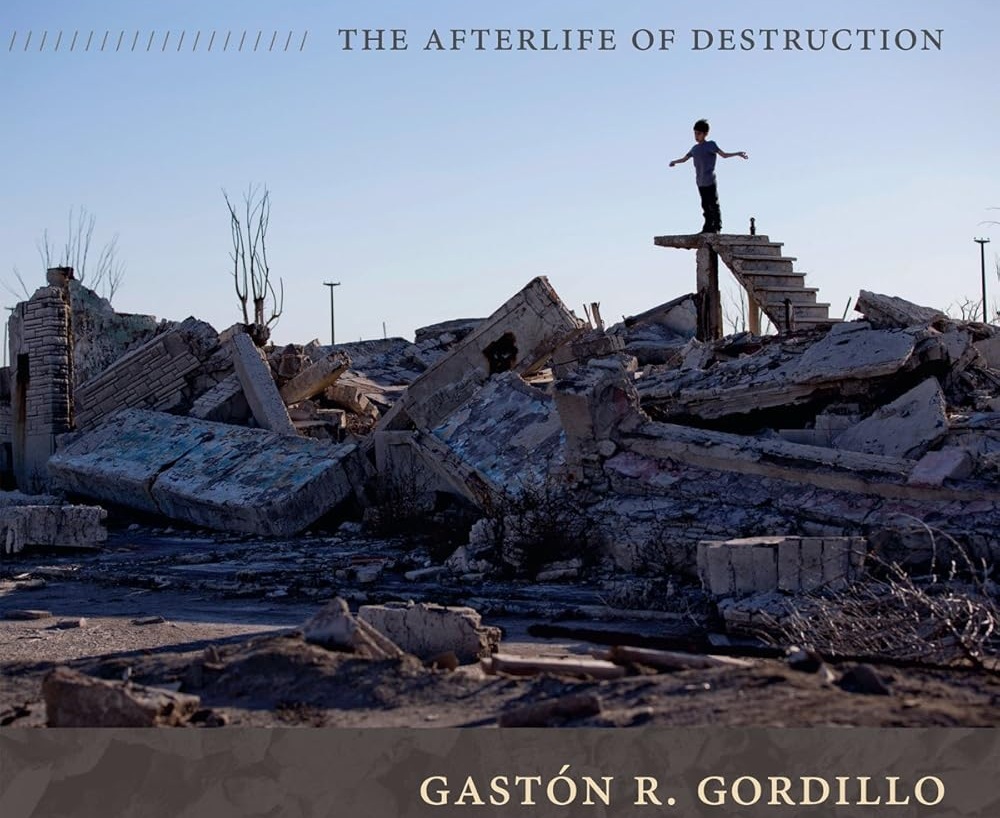
So, what are the different value types vested in a built structure? How are these values lost or eradicated, to make demolition (sometimes a financially lucrative solution) sanctionable? Anthropologist Gastón Gordillo (2014) asked (and to an extend, answered) these questions by comparing the linguistic framing of the dignified fetish of a ruin to a valueless, mere ephemera of rubble.
These are questions that can be tapped into with an architectural mode of thinking. Rather than using our energy to design new structures (that one day will be ruin – or rubble), can we deploy architectural form of analysis (for example what Osmólska and Lewis (2024) call normative analysis, based on architectural experience and intuition) to examine, how a building is materially stripped of its value, in the process of being demolished? What does this comprise of, in terms of the step-by-step infrastructural actions, and how are they aligned with this building’s image in its social context – the way it is portrayed and discussed?
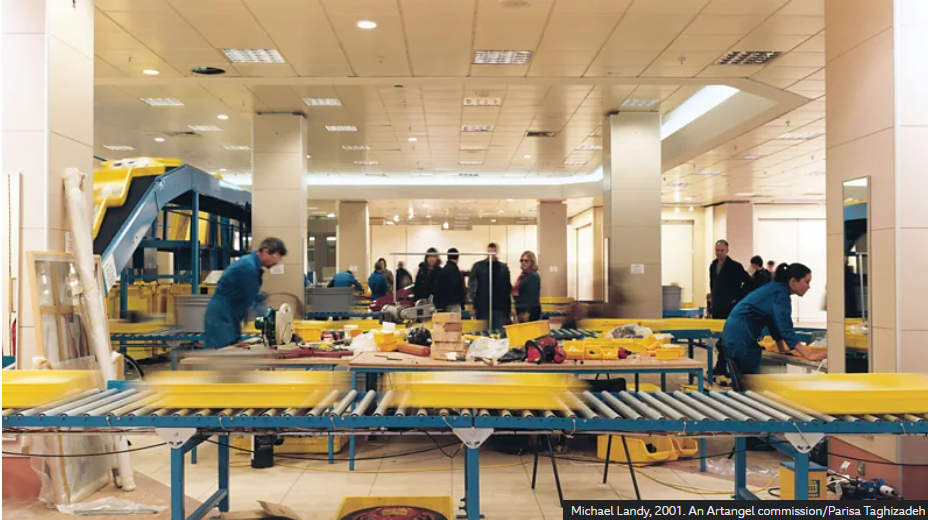
Studying disposal materially involves zooming into the mundane usually ignored activities, taking them apart and discovering their meanings. The audience at the AA seminar helpfully referred me to Michael Landy (2002), who famously destroyed everything he owned, documenting this destruction in detail. What is the value of each item and how does the fact of destruction affect it? As well as the significance of destruction the seminar follow-up covered the preservation or regeneration of buildings (or building parts’), value, as practiced by Rotor in Belgium, Recollective in the UK and Barbara Buser / Bauteilbörse in Switzerland…
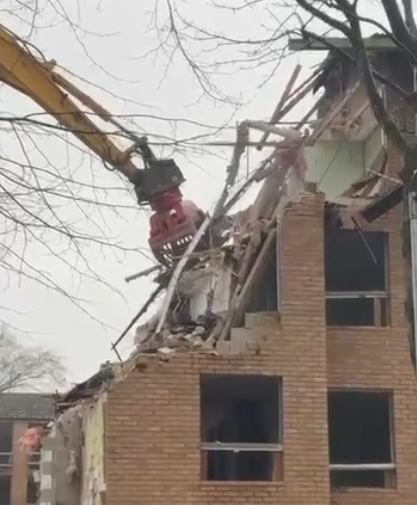
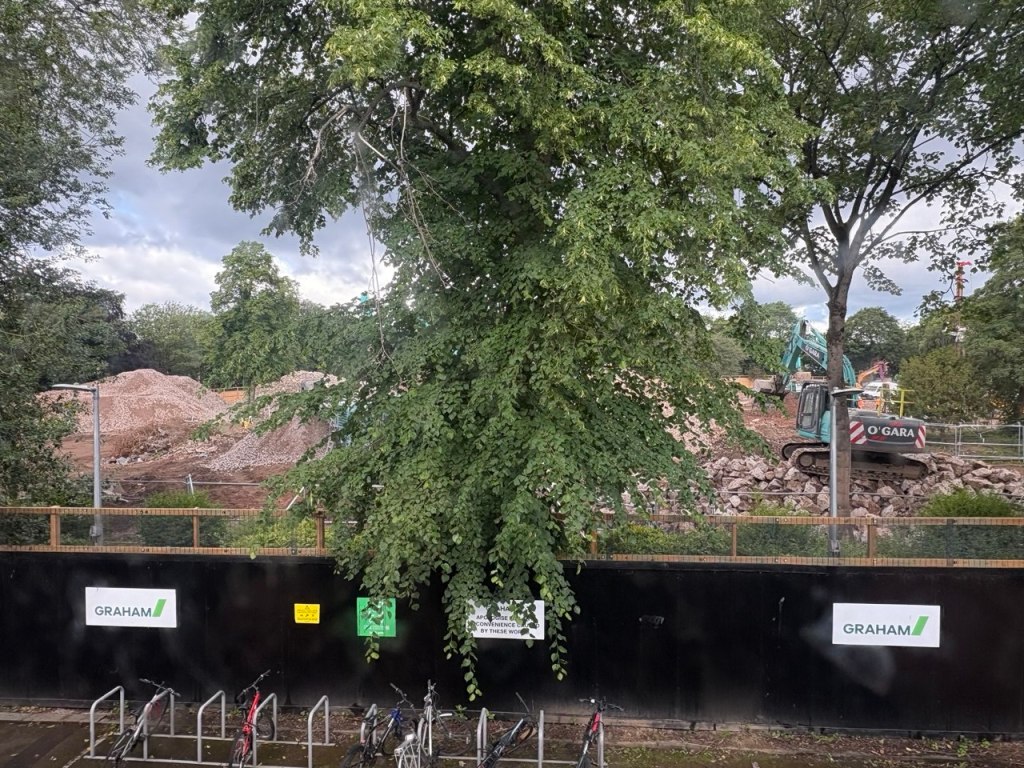
Obsolescence-focused artwork connects the worlds of human and architectural disposal. Posed by artist Stellarc, the questions about the redundancy / outdatedness of a human body in the age of rapid technological advancement, echo those around the built environment, where more replicable, shorter-lived structures increasingly fall into the social role of rubble rather than ruins. Especially where financial interests shape the designation of these roles. The images below (and on the right), taken from the window of Woolton Hall in Manchester shows what remains of Oak House, formerly a vibrant and loved cluster of student dormitories. Will the new sleek PBSA units on this site have the same value?
References:
Gordillo, G. n. (2014). Rubble : the afterlife of destruction. Duke University Press.
Landy, M. (2002). Break down inventory. Ridinghouse.
Osmólska, D., & Lewis, A. (2024). Theorising site analysis: from analysis-synthesis-evaluation to co-evolution. The Journal of Architecture, 29(4), 469-495. https://doi.org/10.1080/13602365.2024.2390617
Robins, D. P. G. (2024). Rendering, waste disposal and the production of value. The Sociological review (Keele). https://doi.org/10.1177/00380261241244874
Shtanov, M. (2025). Respectful Disposal: Spatial and Material Practices of Incinerating Necro-Waste. Social Epistemology, 1-20. https://doi.org/10.1080/02691728.2025.2562477
Shtanov, M. (2026). Decouplement: Commodity Geography of the Corpse. Antipode, 58(3), e70166. https://doi.org/https://doi.org/10.1111/anti.70166
Thompson, M. (2017). Rubbish theory: the creation and destruction of value. Pluto Press.


