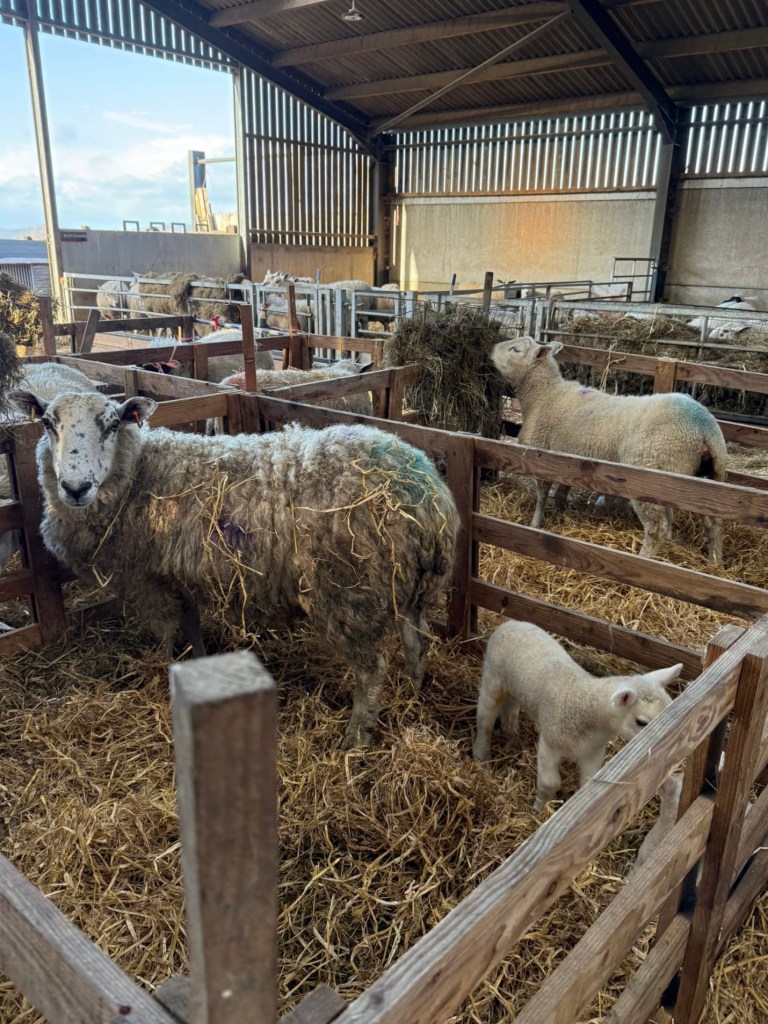
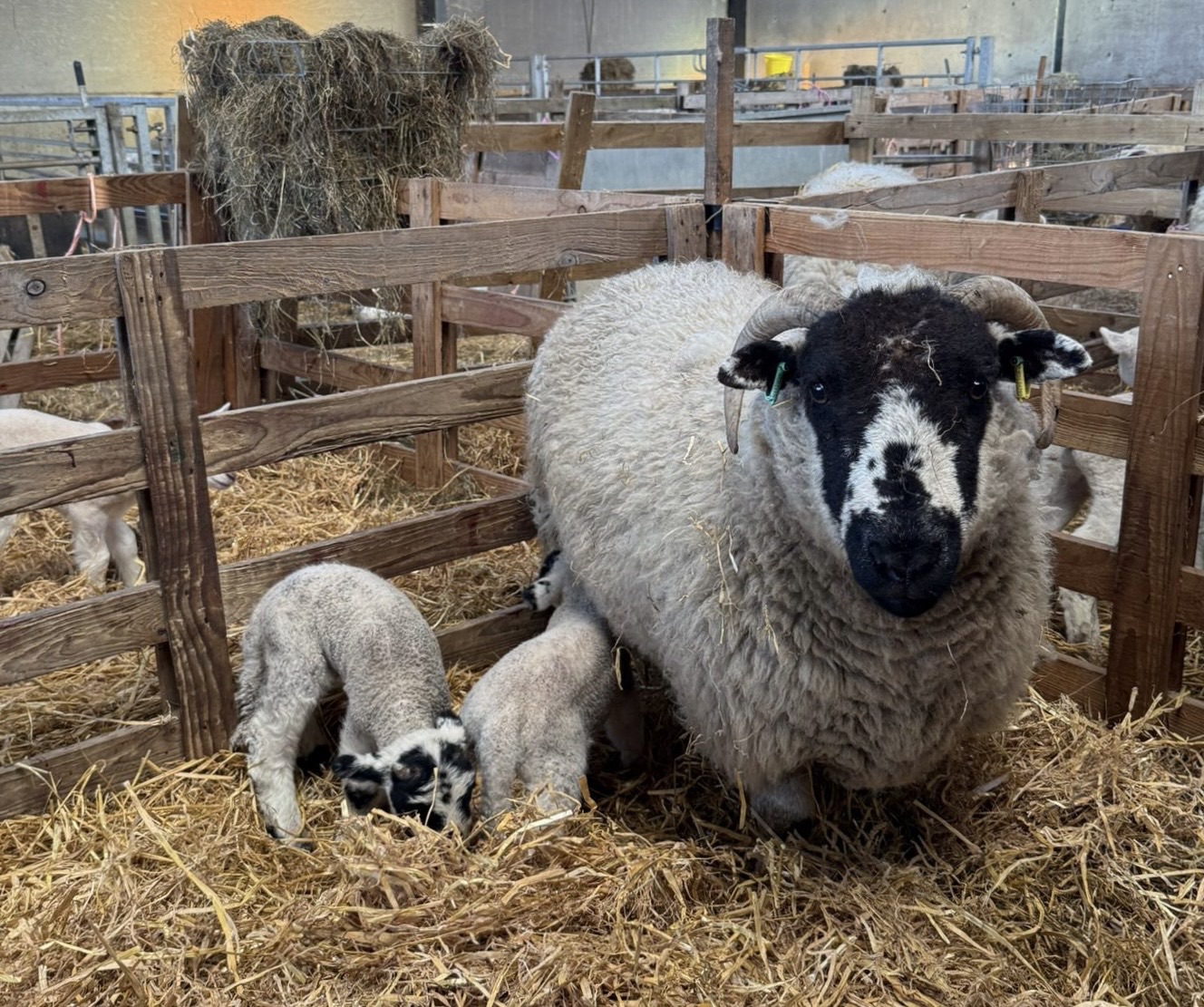
Yesterday I got a chance to feed hay to sheep in their lambing period. A friend helping a farmer in North Yorkshire invited me to help and I got to chat to the farmer about the overall cycle of breeding sheep, predominantly for meat.
The cycle starts with the Hill breed (a sheep with a dark face and horns) who is inter-bred with a ram, whose breed name escapes me. Their lamb, if female and ‘well behaved’ (not falling ill and keeping at peace with other sheep and the farmer) is kept for several years for mating with a Texel ram – a muscular and high quality meat breed from continental Europe, popular for interbreeding with local British sheep. The lambs from this mating are sold at auctions to be butchered for meat.
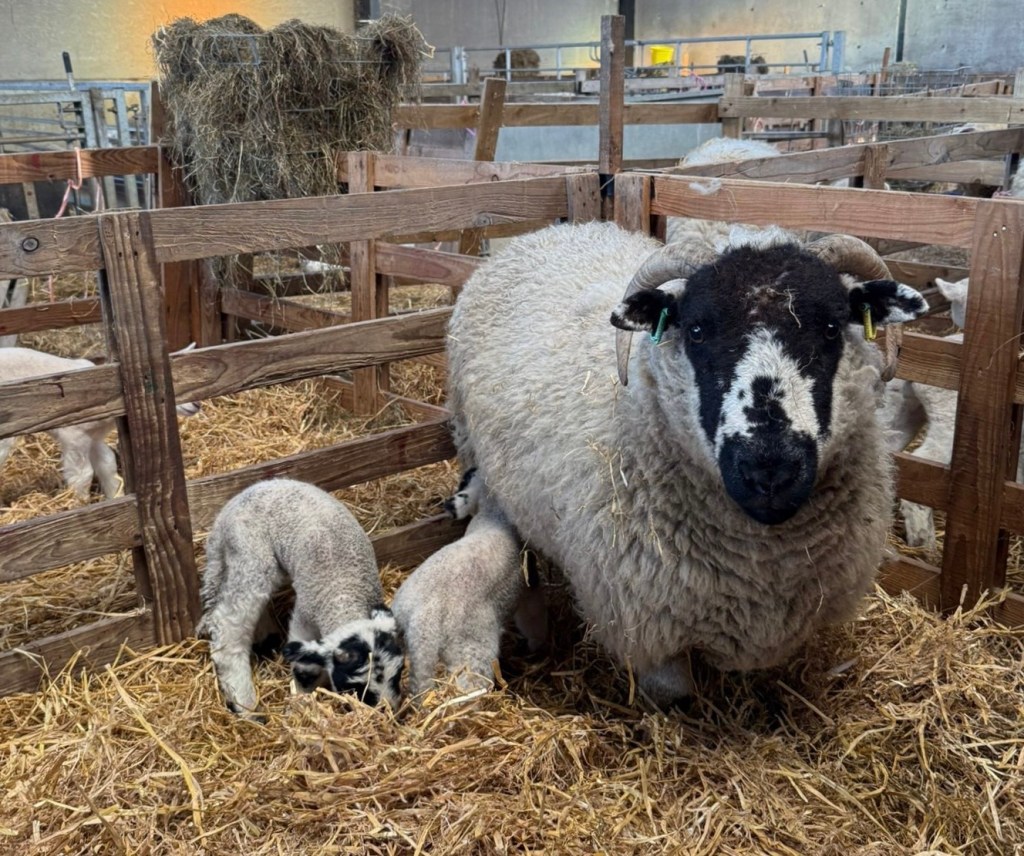
Sometimes these lambs are fattened up in the farm where they are born. Other times, farmers specifically designating themselves to fattening up buy the little lambs from the original farmer and let them grow at these other farms specifically designated to fattening up .
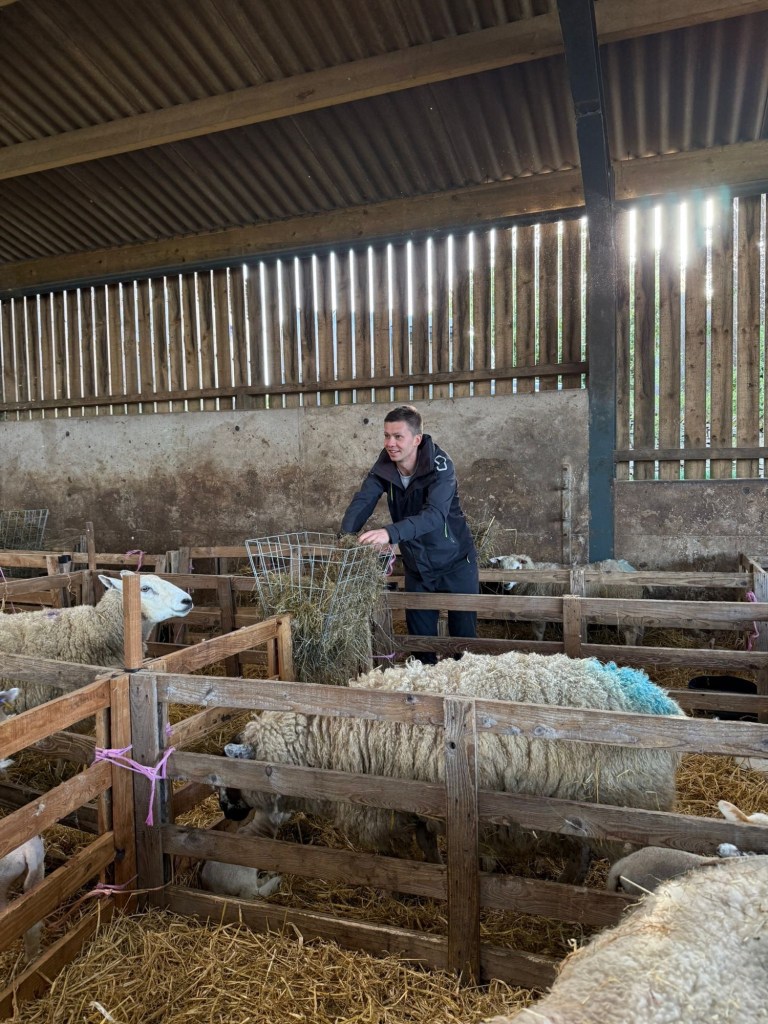
The experience of spending the afternoon here made me more aware of the complexity in the world of sheep – not just in terms of the interbreeding process, but also in terms of the different moods, states and appearances the lambs can be in. Some are sleeping and barely moving, others jumping up to their own head height , and others persistently ‘glued’ to their mothers in search for milk. Where a lamb dies, the mother-sheep can still give milk to another lamb, although it keeps rejecting the baby due to its unfamiliar smell. In such instances, this sheep is tied to the enclosure posts so it does not injure or kill the unfamiliar, alien baby.