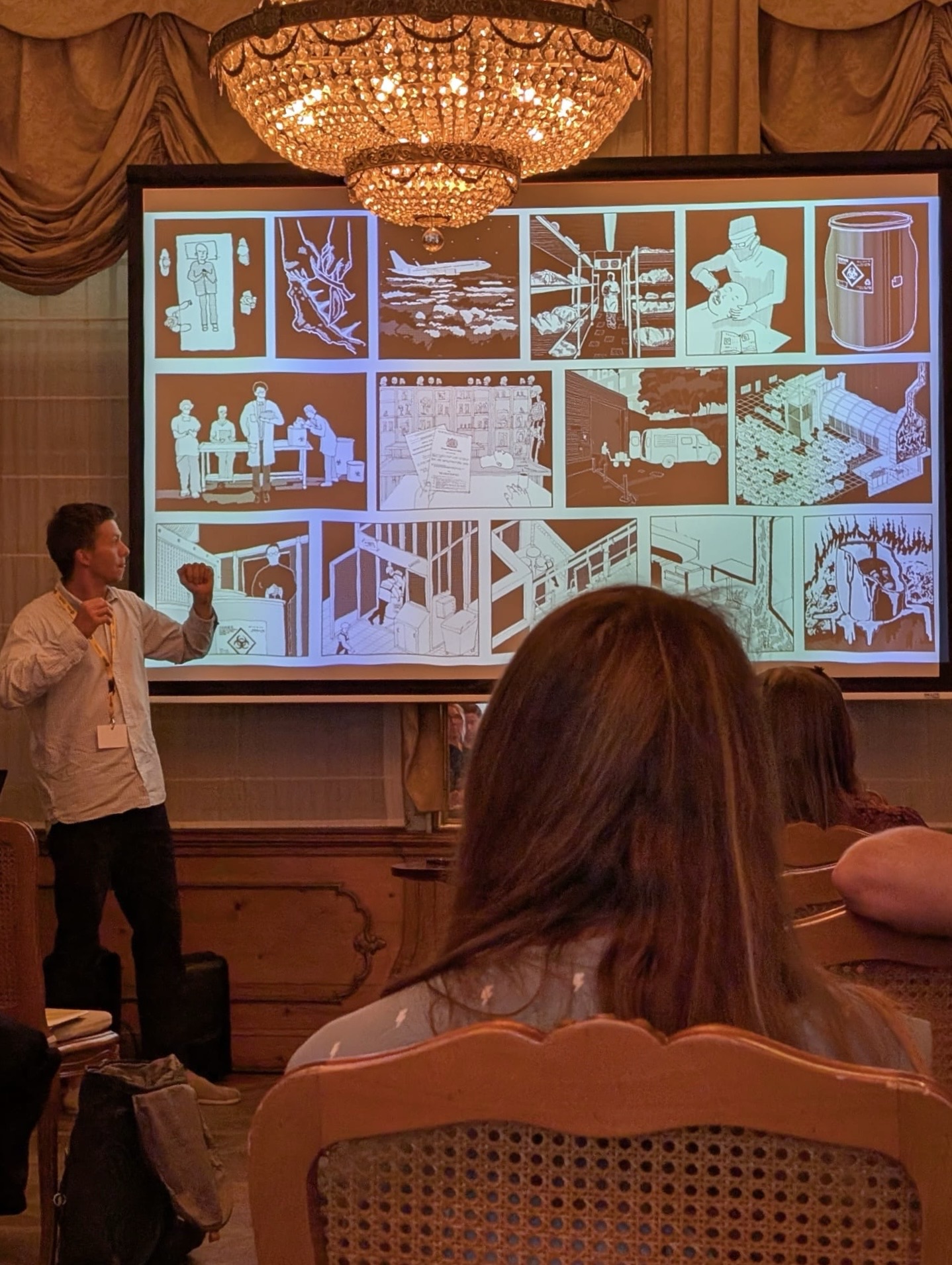
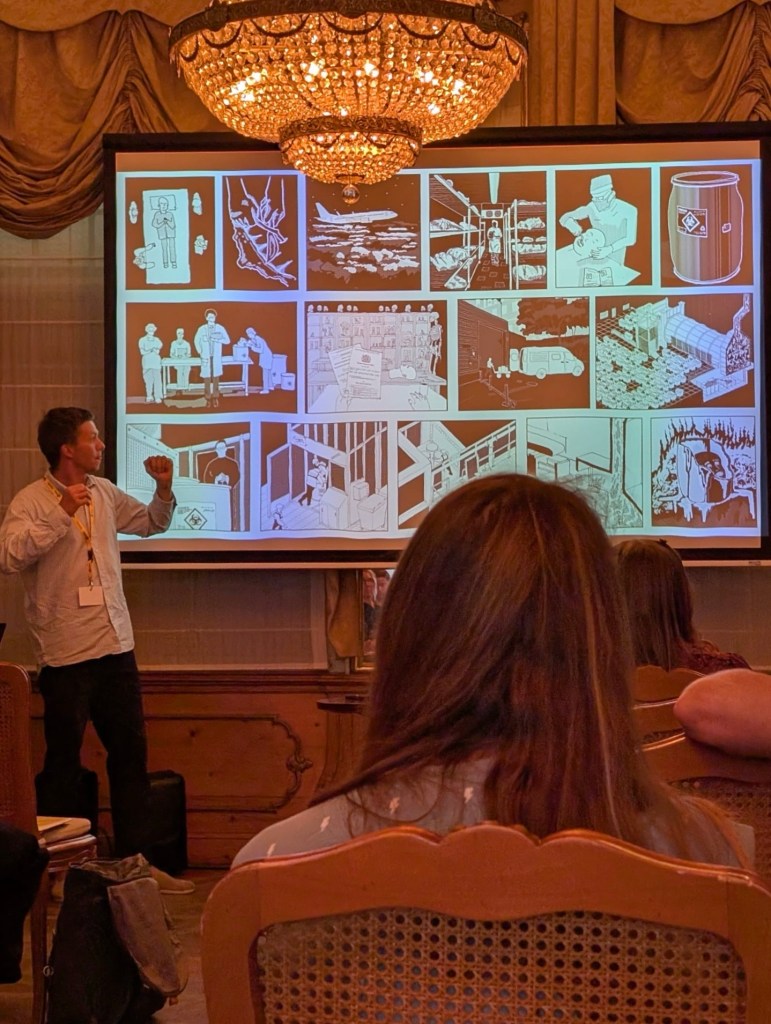
Last Wededay (27.08.25) I presented my phd at the biannual conference on Death, Dying and Disposal in Utrecht.
First I introduced the attendees to the illustrated transformation of the course into a commodity and subsequently into waste. This graphic narrative, which I am gradually expanding, can be accessed here (link to be updated).
I then juxtaposed the findings from the co-design workshops with death specialists and waste workers. These two groups’ vastly diverging perspectives on incinerating the body parts will be discussed in a paper I am expecting to publish next year.
I was presenting after Joel Ferrall from the University of Southern California and Hanne Dielis from the University of Antwerp. Joel offered an anthropological perspective on the novel techniques of heart transplantation, whereas Hanne compared how corpses donated to science are legally protected across some European countries. The audience’s feedback to the three of us pointed to important ongoing issues in medical humanities, such as the racial injustice between the donors (for example with the American prisons, in my case) or the slippery nature of anatomical gifts – that cannot be given back or made in exchange. The session chair, Georgina Robinson, pointed to Maurice Godelier’s book the Enigma of a Gift.
My study resonated with many other projects presented at DDD. On the following day I listened to Halina Suwalowska from Oxford University present about the complexities of using art to discuss postmortem procedures and human tissue display. Halina’s study highlighted the opportunities of painting for reconciling and even decolonising the existing north – south relationships (UK/South Africa in this case) around the ethical dimensions of death.
A talk by Lucy Hyde from Bristol university touched on the ethics of making and using anatomical images, given the scarcity of information on the donors of the portrayed bodies and the details of their consent. Ella Palmer from Bangor University presented her encounters with the cadavers and with the medical students using the cadavers, highlighting the emotive and interpersonal entanglements of doctor training.
Being an early pioneer in euthanasia, the Dutch society (and particularly its death specialists) continue to hold discussions about the freedom of choosing to die.
The conference provided a platform for debates around liberalisation of the country’s current euthanasia laws and on a proliferant Dutch term, levensmoeheid meaning ‘tiredness of life’.

 no.balsa