

Some of the Eurocentric stereotype-based perspectives on life in the United States have proven to be simplistic, based on a week of my observations in Detroit, Chicago and rural Michigan .
Detroit

As a city of a legendary industrial past, Detroit is comparable to Manchester. Yet, despite both cities’ being epicentres for the late 20th century’s electronic music creation, American Mo-Town’s recovery from the post-industrial deprivation took a different trajectory to that of the British Cottonopolis.
Detroit’s compact busy downtown area is engulfed by a vast suburban area interspersed with mostly empty yet legible streets and vast pothole-punctuated highways. Reminiscent of the auto-industry’s shrinkage, many plots stand empty whereas the public transport is non existent.
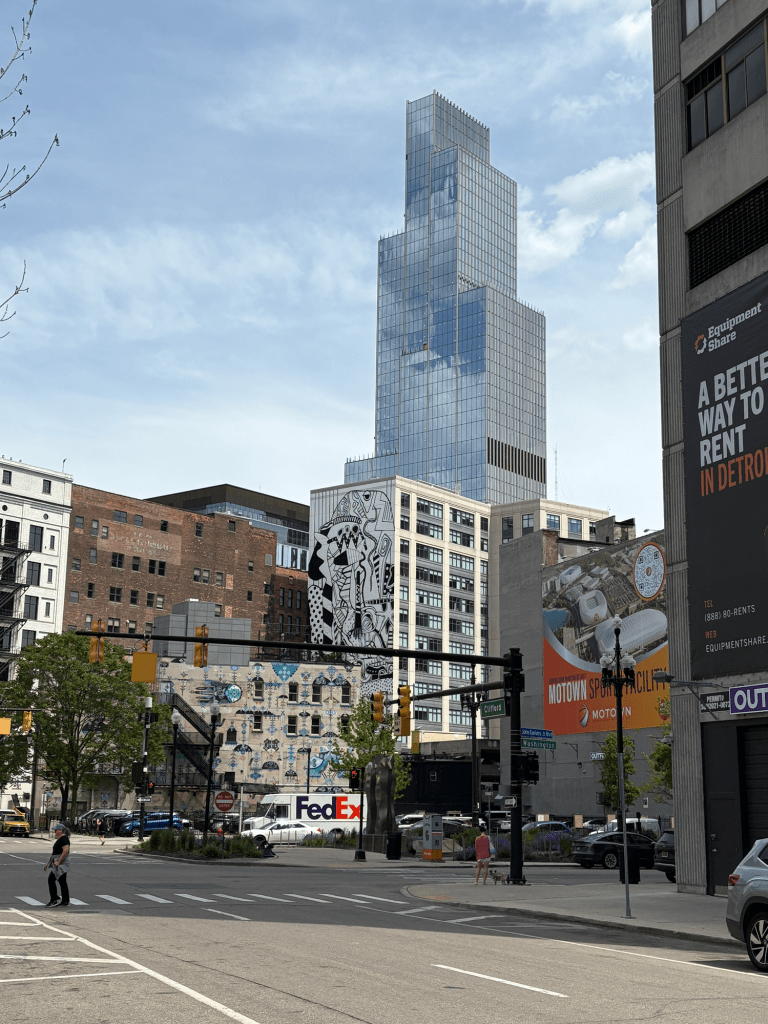

Yet, behind its post-apocalyptic mechanised patchy facade, the American city reveals signs of a big authentic soul, un-seduced by capitalism. Whereas Manchester has been devoured by corporate landlordism, service and hipster economies, Detroit predominately stayed affordable and creative. Musicians, artists and wood-makers form into cohesive and inclusive queer-friendly communities, one of which I had a fortune to become part of, albeit for a few days. A saying I have once heard about Berlin definitely applies to its techno-parent: poor but sexy.
Michigan state

Neither too poor nor too rich, devoid of oil reserves, tech-bro headquarters and international cities, the border state of Michigan offers a diverse and complex more-than-human ecosystem.
Abundance of national flags, churches and ‘God bless America’ slogans speak to me about an ongoing forging of a national identity: deprived of millennia-long cultural history, Michigan’s residents use modern accessible means for building an image of American authenticity.
The charismatic fuel-hungry cars contribute to this identity-search and reveal a genealogy of their own purpose and development: some seem to be used for status, others for functional purposes or as a nod to the region’s long and rich automobile history. Abundance of beavers, herons, eagles, groundhogs and the vastness of their habitats strikes someone used to British hills and sheep.

Chicago
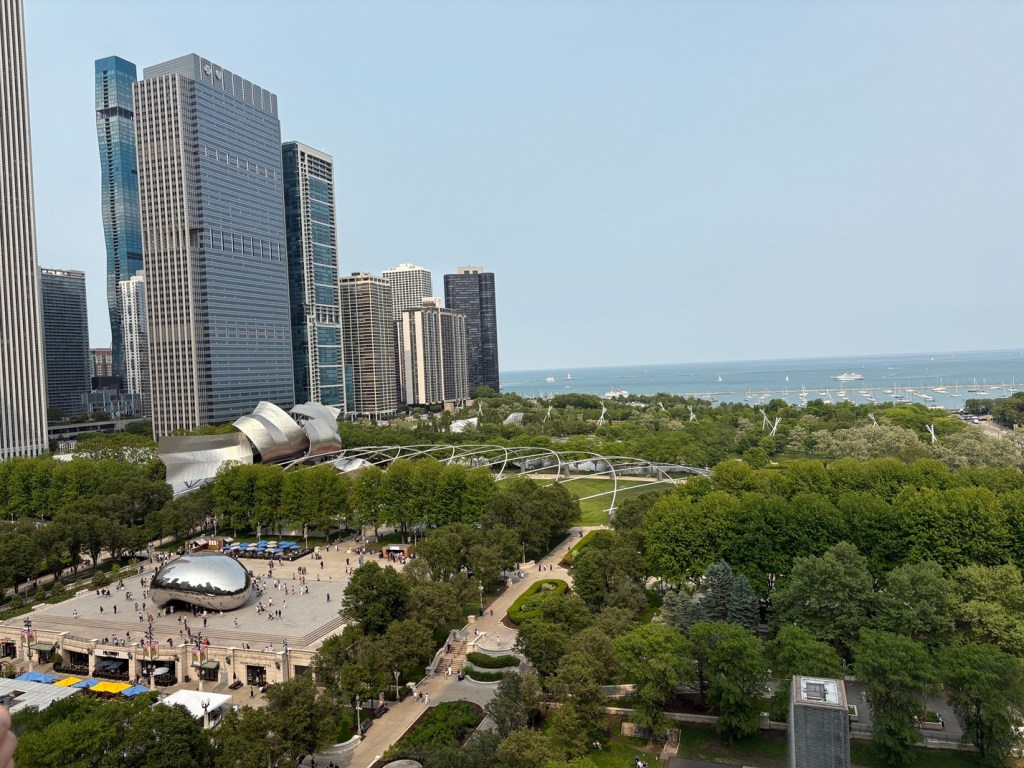
As a nationally critical centre for financial services and real estate, central Chicago feels like central London. It’s branded T-shirts prey on tourists from behind the vitrines, whilst men and women in smart work dresses and shirts share their career aspirations in rooftop bars, more in the evening. Down- and Mid- town’s generous Lincoln and Millennium parks save a visitor from the sensory overload caused by overcrowded boulevards.
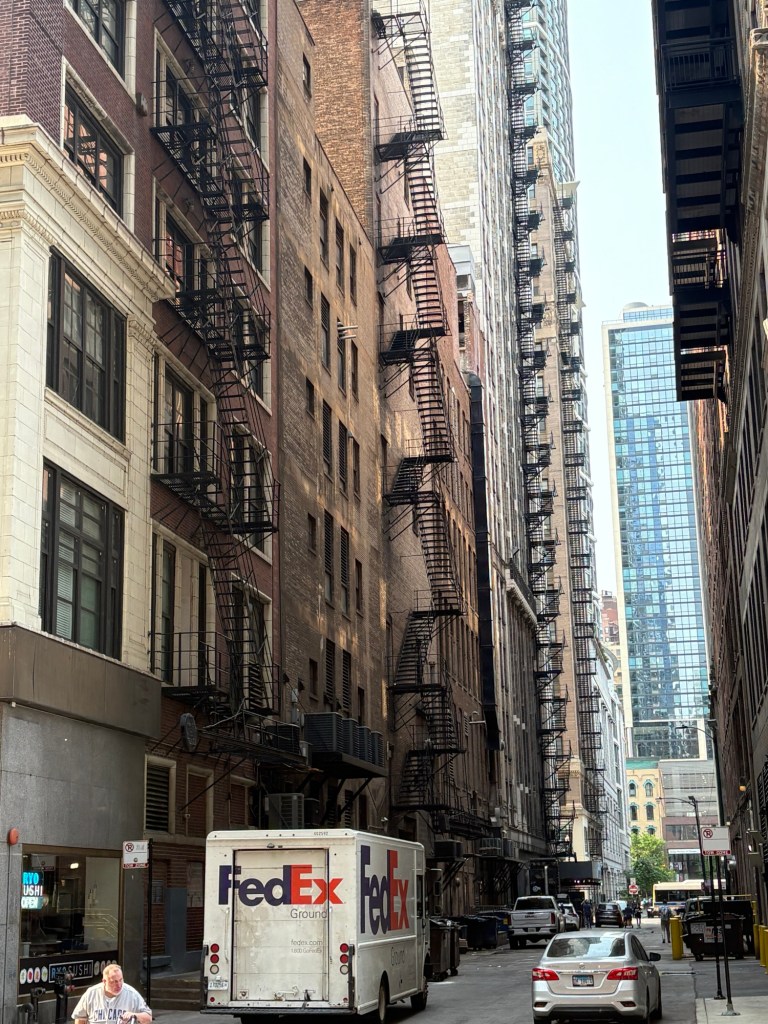
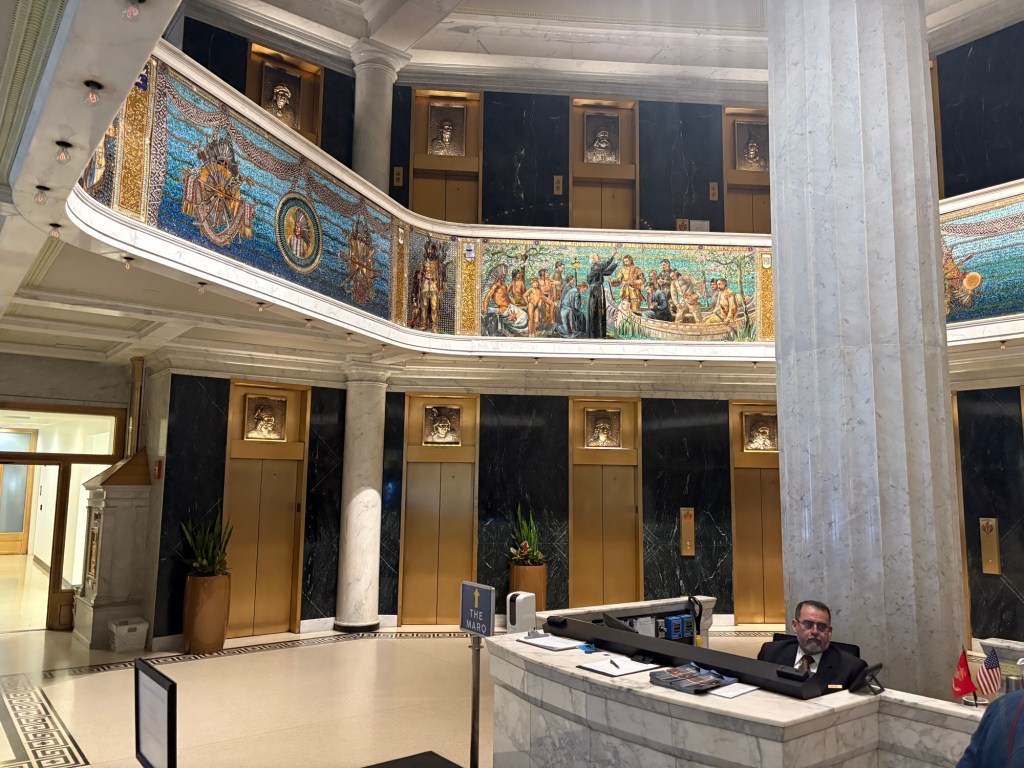
Chicago’s difference to most major global cities is in the uniqueness of its architecture. Similarly to Rome or Athens, a building enthusiast comes here to learn about the ‘world’s firsts’, notably the first steel frame skyscraper or its minimalist steel and glass successor, envisaged by Mies van der Rohe. Having learnt about Chicago school during my undergraduate studies at Bath, I was fascinated to see the grandeur of the marble lobbies, hierarchies of column orders differentiating the rank of their bank buildings, mosaics depicting history – peaceful or violent (not sure where the scenes of preaching Christianity to native Americans sit in this spectrum). Gothic cathedral-tops, giant sphinxes, curved mirrors, meatpacking warehouses, and rebellious trespasser of the Lake Drive – Chicago offers skyscrapers of all imaginable typologies.

 no.balsa