
This is a short and sporadic critique of the Neoliberal concept of free choice from someone who grew up in the early years of Post-Soviet Russia and is living in the UK today.
In the Euro-American world there is a widely spread paradigm that everyone has a choice and can always do better: earn more, buy a larger flat, find a more successful partner, go on a more exotic and authentic holiday. I often notice that this idea makes myself and others around me unhappy and unsatisfied.
Living their grown-up life in the last thirty years of the Soviet Union, my grandparents did not have many choices. Forty years ago, they were allocated a plot of land to grow vegetables. Ten years prior, they exchanged a 3-bed flat in a small town for a 1 bed flat in a large city. In both cases there was only the choice to commit to something or to live without it. Soviet citizens were sent to work in remote towns (in Kazakhstan in my grand aunt’s case) and there was no choice. Many discovered happy and unexpected surprises in such places. One learnt to love the partner they met as there were no drastically different choices in terms of how progressive, healthy, well-off or stable another potential partner would be. Soviet citizens were not offered 20 different alternatives with their respective pros and cons, causing them anxiety and sleepless nights. There was no widely spread and painful awareness that someone else’s conditions were much better (although this actually was not the case as we now know). From what I hear, there was little insincere bum-licking and unhealthy hours at the workplace (though in its pointlessness the work was often surpassing today’s ‘bullshit jobs’1 proliferating throughout our Western offices). Everyone did their bit and was in similar conditions.
I am not trying to say the Soviet world was fairer than today’s Neoliberal world. As we now know, the elites had enormous privileges, people were exploited, there was no freedom of speech and there were harsh punishments for voicing one’s opinions. I did not live at the time and never experienced the struggles people had. Undoubtedly, the Soviet life varied enormously depending on the place and the period. Nevertheless, from my conversations with the elders, I sense that there was a certain unifying idea, a mental paradigm, a calming and reassuring lie (which could have been proven untrue if questioned) that allowed the ordinary soviet citizens to make choices easily and live freely, though without having much actual freedom.
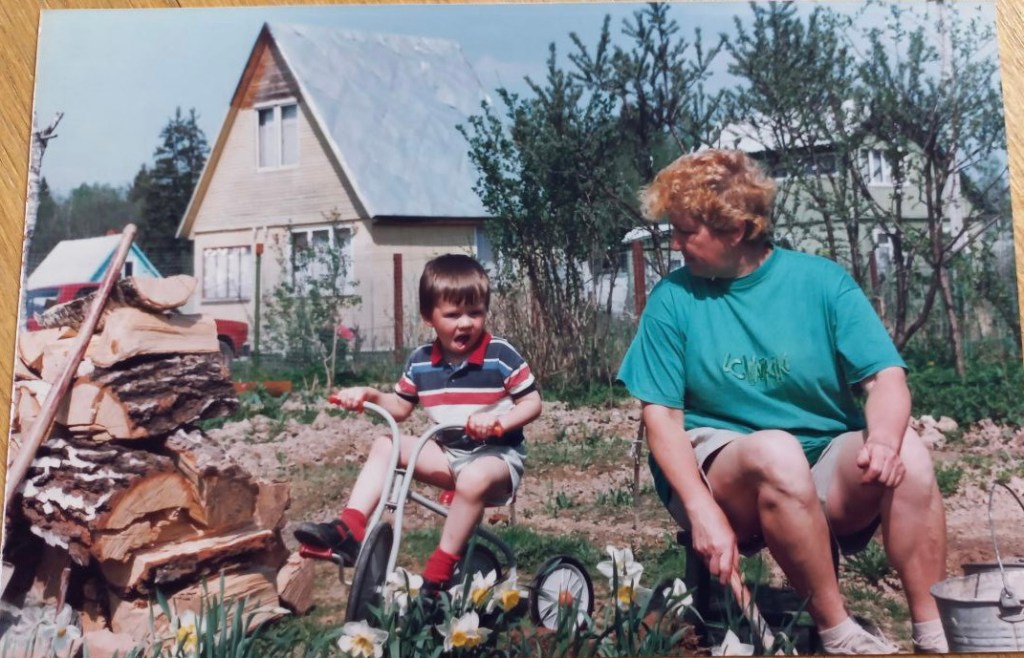
When I question my choices, I like to imagine that I have no more choice, than did my grandparents, around 40 years ago. At the time, they were allocated a 20x30m plot of land which happened to be the happiest place on earth.
- Graeber, D. (2019). Bullshit jobs : a theory, [London], UK : Penguin Books, 2019. ↩︎

 no.balsa