Sweden is one of Europe’s leading countries for producing biochar from organic waste. The production is growing fast, becoming more viable and replacing other alternative treatments for sewage sludge and other organic wastes. Today I met with an energy strategist at the Municipality of Lund in south western Sweden, who works on the biochar (‘biokol’ in Swedish) project called Rest till Bäst. Here is a brief overview of the process and contractual arrangement.
- Park / garden waste, seaweeds (from beaches) and waste water treatment sludge (sewage treatment by-product) are brought to facilities, operated by a private company Skånefrö . Other municipalities have contracts with other companies
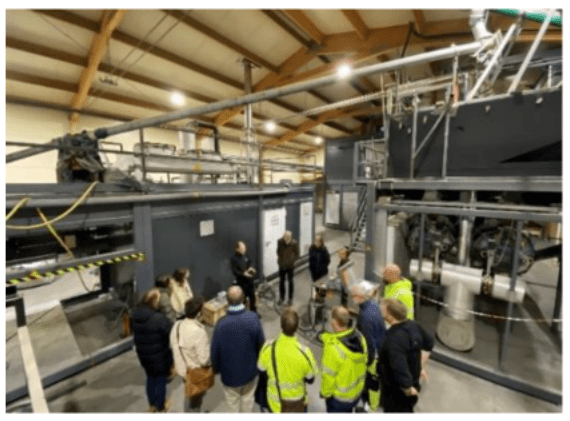
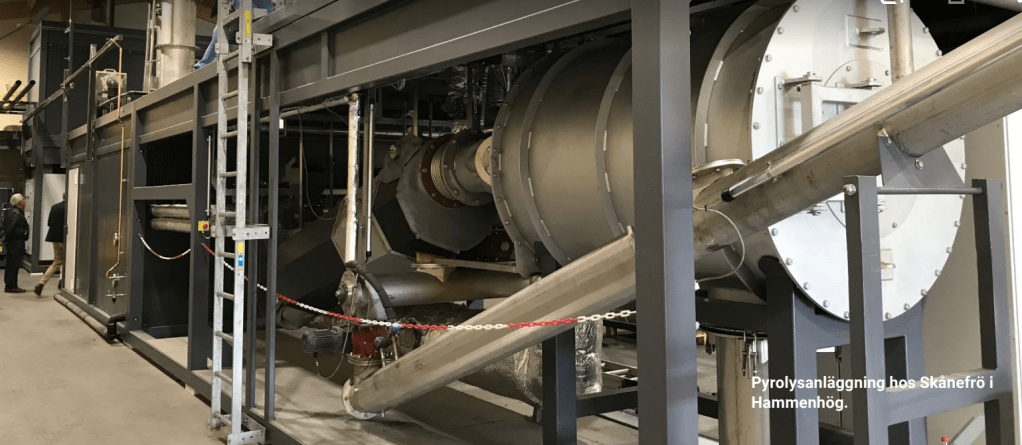
- Skånefrö has a number of facilities, medium-sized sheds with pyrolysis kit installed inside. The overall size of the plant can fit in a shipping container or two, as per the current scale of operation. Kit used by Skånefrö is made by Pyreg, however there are other manufacturers, such as Biomacon. The number and distribution of Skånefrö facilities was not made very clear.
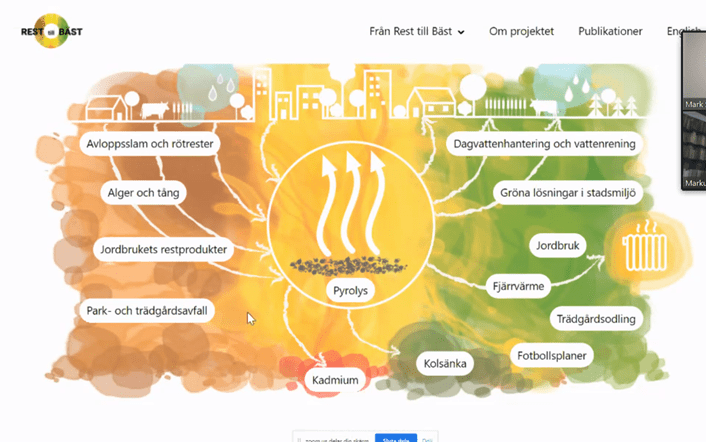
- An anaerobic thermal treatment at 5000-6000° C separates the biowaste into fractions (refer to diagram below). The heat extracted from the process is supplied to a district heating network and the excess heat is re-circulated to maintain the pyrolysis process.
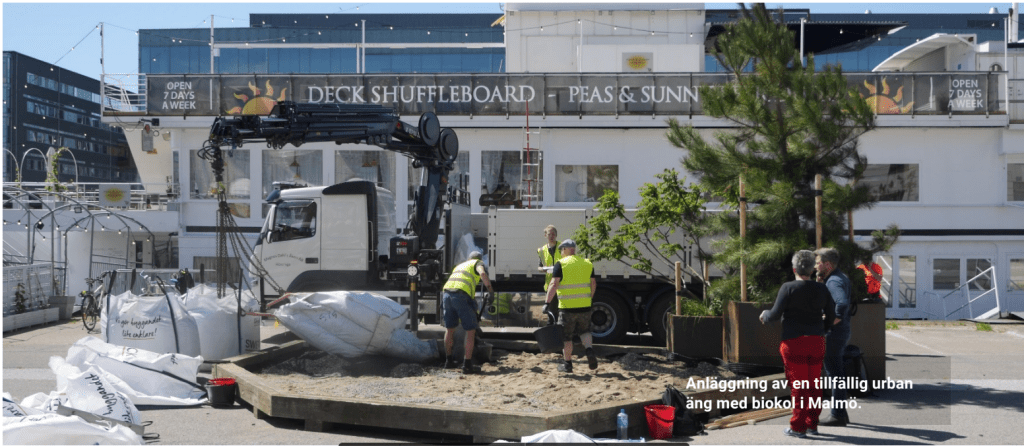
- One of the by-products of the process is the biochar which is predominately made of carbon. Other than making the process carbon-negative by absorbing it, biochar by-product is nutritious and can be used to enrich soil. The biochar is therefore bought by the municipality to be mixed with rocks and compost for tree planting in urban areas.
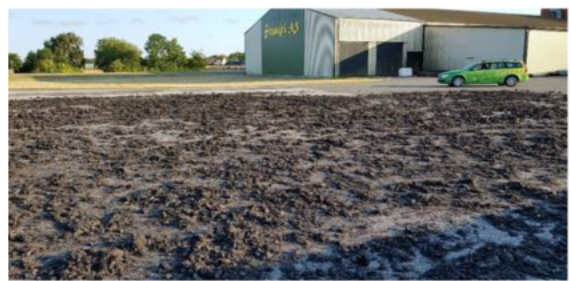
The reports about Rest till Bäst can be found here: https://biokol.org/publikationer Some images from the process, taken from Rest till Bäst brochures, are shown below:

 no.balsa