Living in the Arctic Tundra
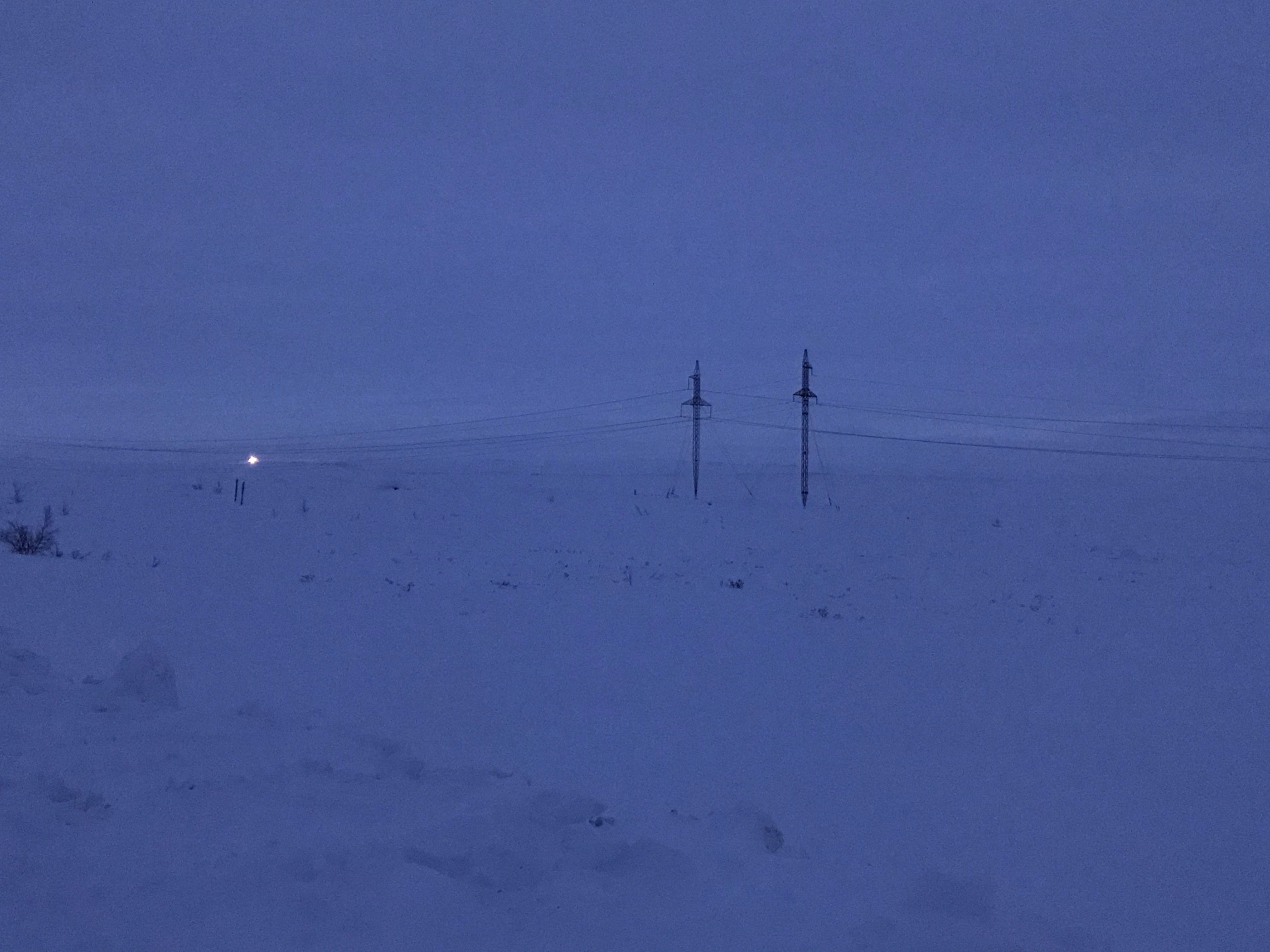
Around 70km to the north from Murmansk any trees disappear and one is faced with vast white nothingness stretching to the horizon. Although in this latitude the sun does not rise for 1.5 months, the surroundings are visible due to diffused light and reflections coming off the pristine white snow. When the sun starts to appear the roads can be most dangerous: infinite reflections of sun rays between the snow and the atmosphere obscure the definition of the horizon and one’s perception of ‘top’ and bottom’.
The winter winds in the towns of tundra can be sufficient to knock an adult off their feet. Latchway systems along some streets are previewed for the use of children going to schools.
The summer conditions are rather favourable: with the sun continuously being above horizon for 2 full months, it is possible to sunbathe at night (in the more open areas) having taken a plunge last winter’s snow (in a more sheltered area). In terms of its wildlife, the tundra is relatively safe for human due to absence of polar bears: because the Ocean does not freeze, it is impossible for them to traverse onto the continent here.
Infrastructure of the Arctic
During winter the roads are often paralysed by snow storms. It is not uncommon for cars and buses to be snowed in. In such situations, travellers’ only option is calling the regional agency Murmanskavtodor who operate sufficiently robust road clearing vehicles.
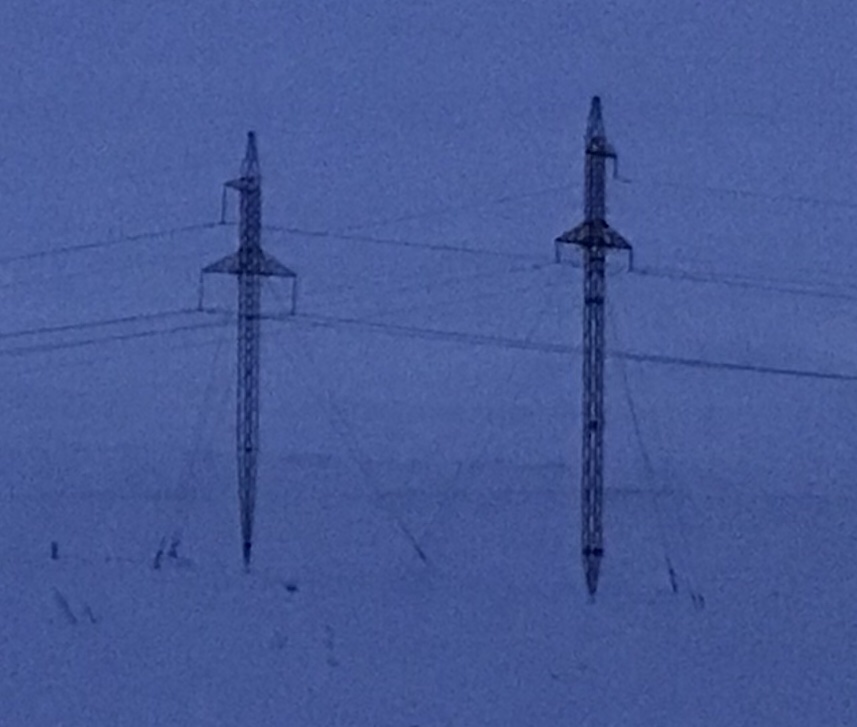
Despite its desolate appearance and extreme environment, Murmansk Region is rich in power generation: there are numerous hydroelectric power stations, nuclear plants and even one unique tidal generator (given a 7m height difference of tides at some point. An Italian company Enel in collaboration with the regional government is building the region’s first set of wind generators, the largest in the arctic.
Teriberka
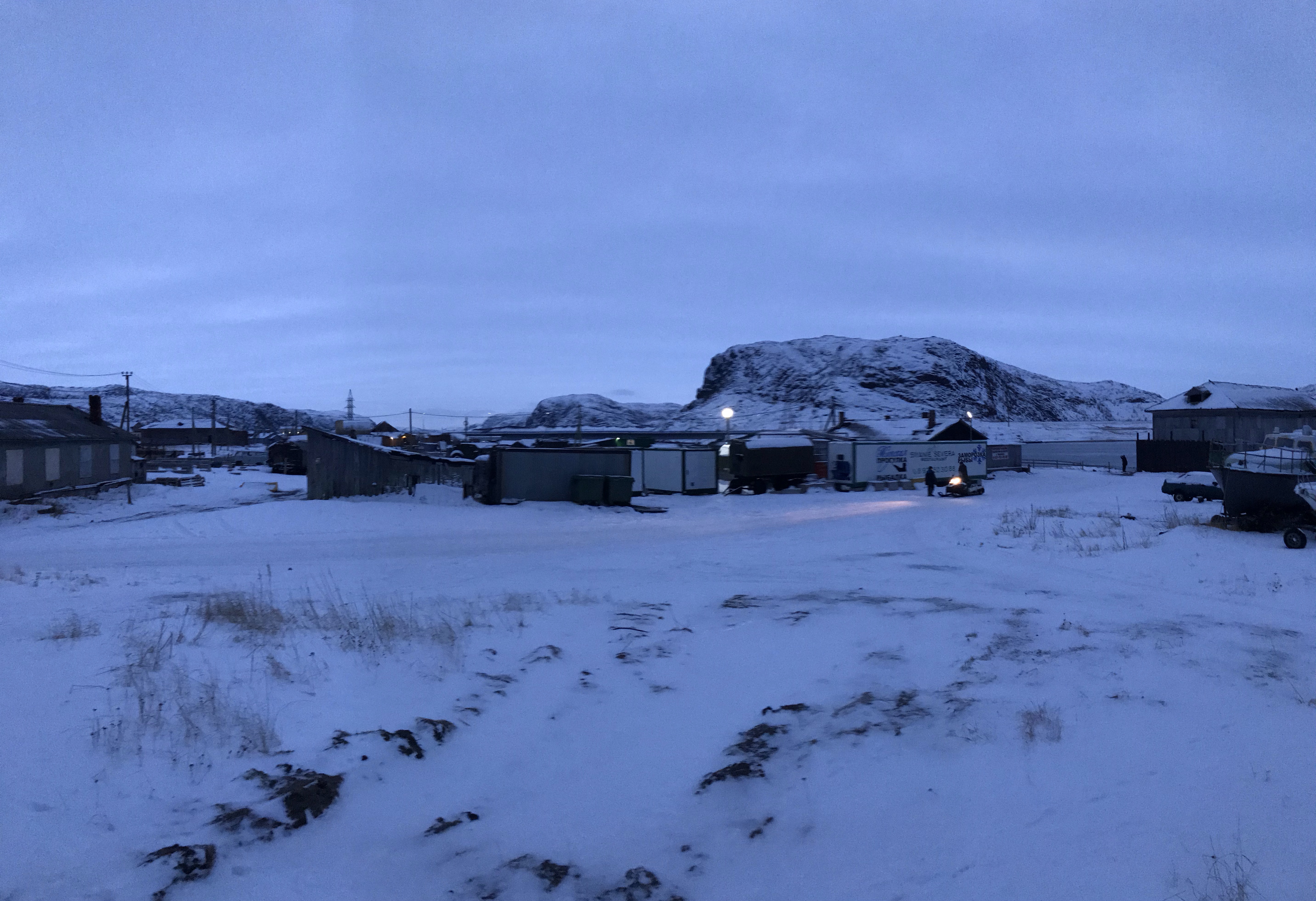
Teriberka is probably the most picturesque Russian village of the Arctic coast, a movie set to a number of films including The Leviathan (dir. Zvyagintsev, 2014). Road to Teriberka is a 2 hour car journey north-east from Murmansk, however during winter it can become inaccessible for up to a month due to heavy snow storms. When fishing was flourishing during the best days of the Soviet era, the village had several thousands inhabitants. Following the country’s collapse in the 1990s Teriberka’s population decreased to several hundred, due to poor infrastructure and lack of food: harsh laws did not permit the individual residents to fish in the Arctic Ocean. Since 2008 these rules were lifted and the life ‘at the world’s edge’ is gradually improving, partly thanks to the Chinese tourists who come to take a picture on the iconic swing overlooking the Ocean.
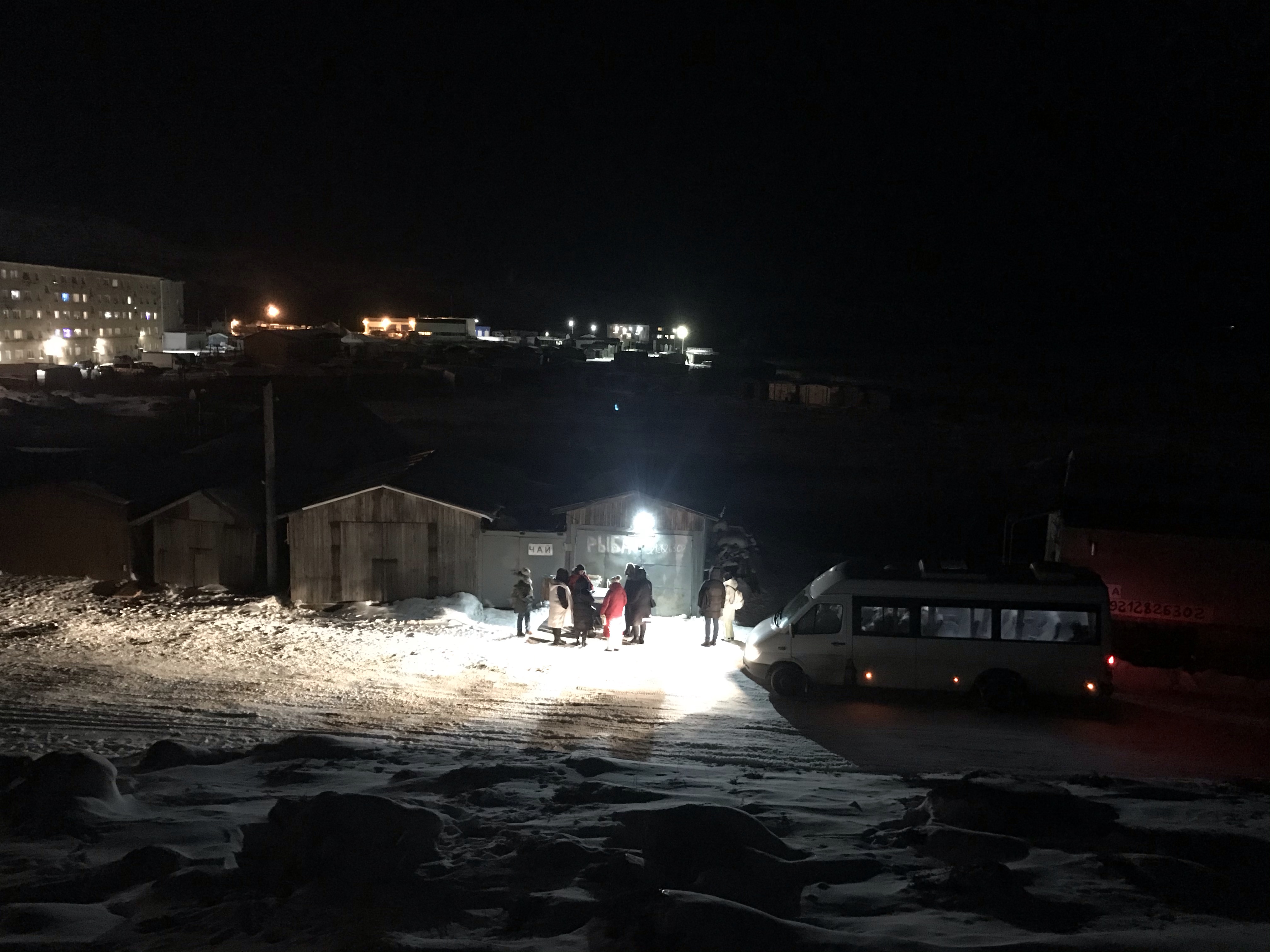
Tourists waiting for a local fisherman to open his shop, based in an ordinary garage 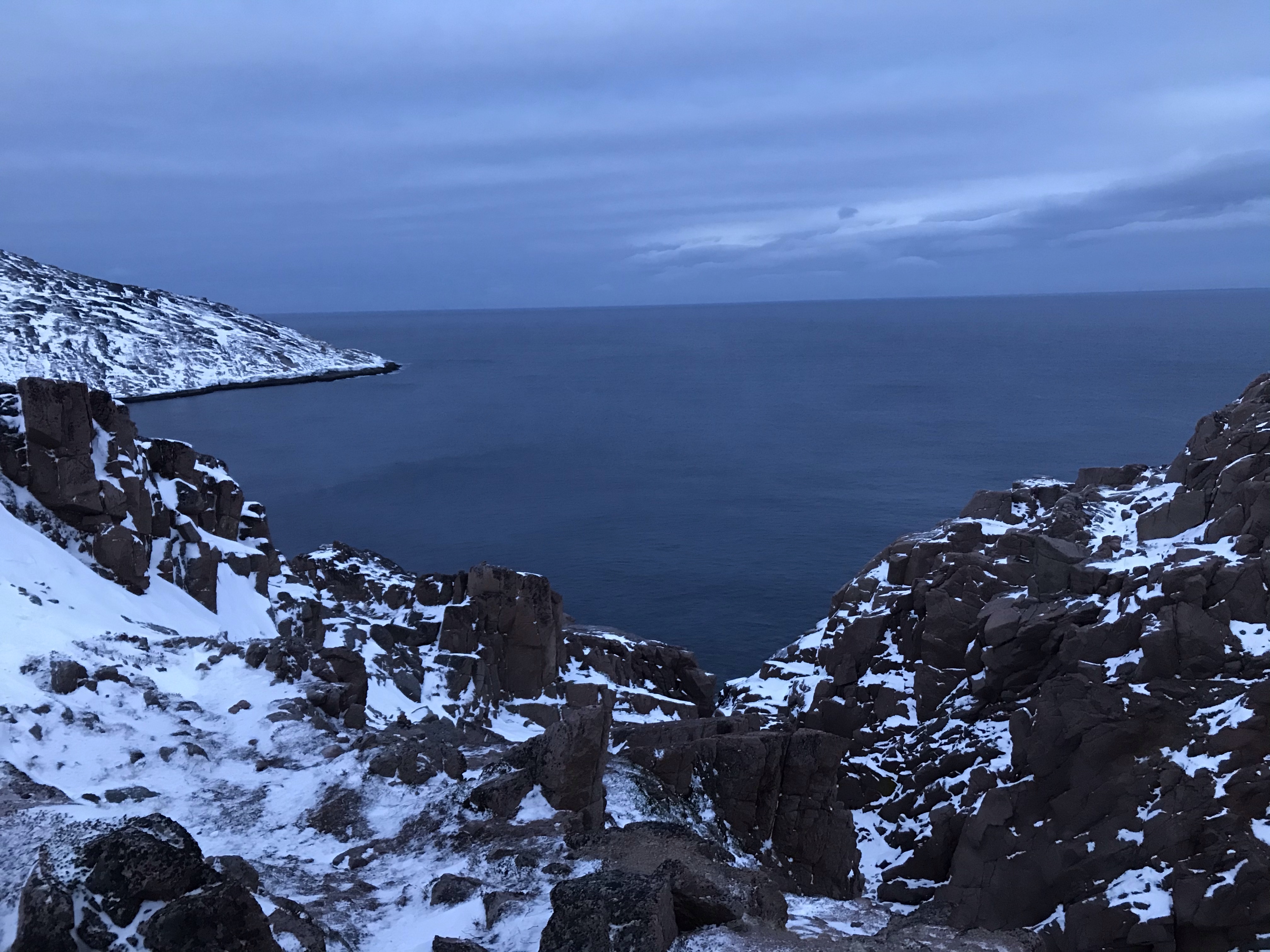
The Arctic Ocean 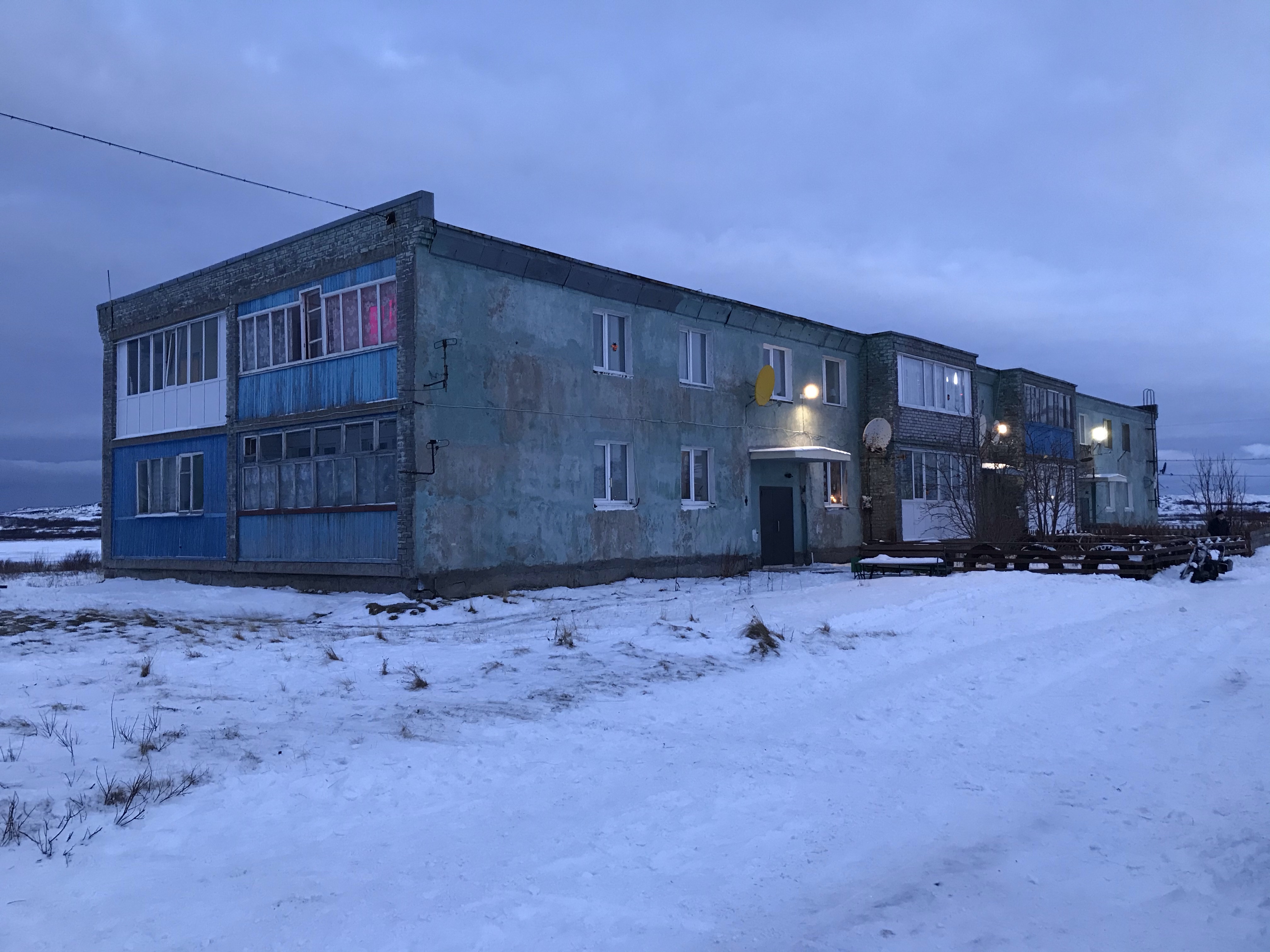
Typical Apartment Block in Teriberka 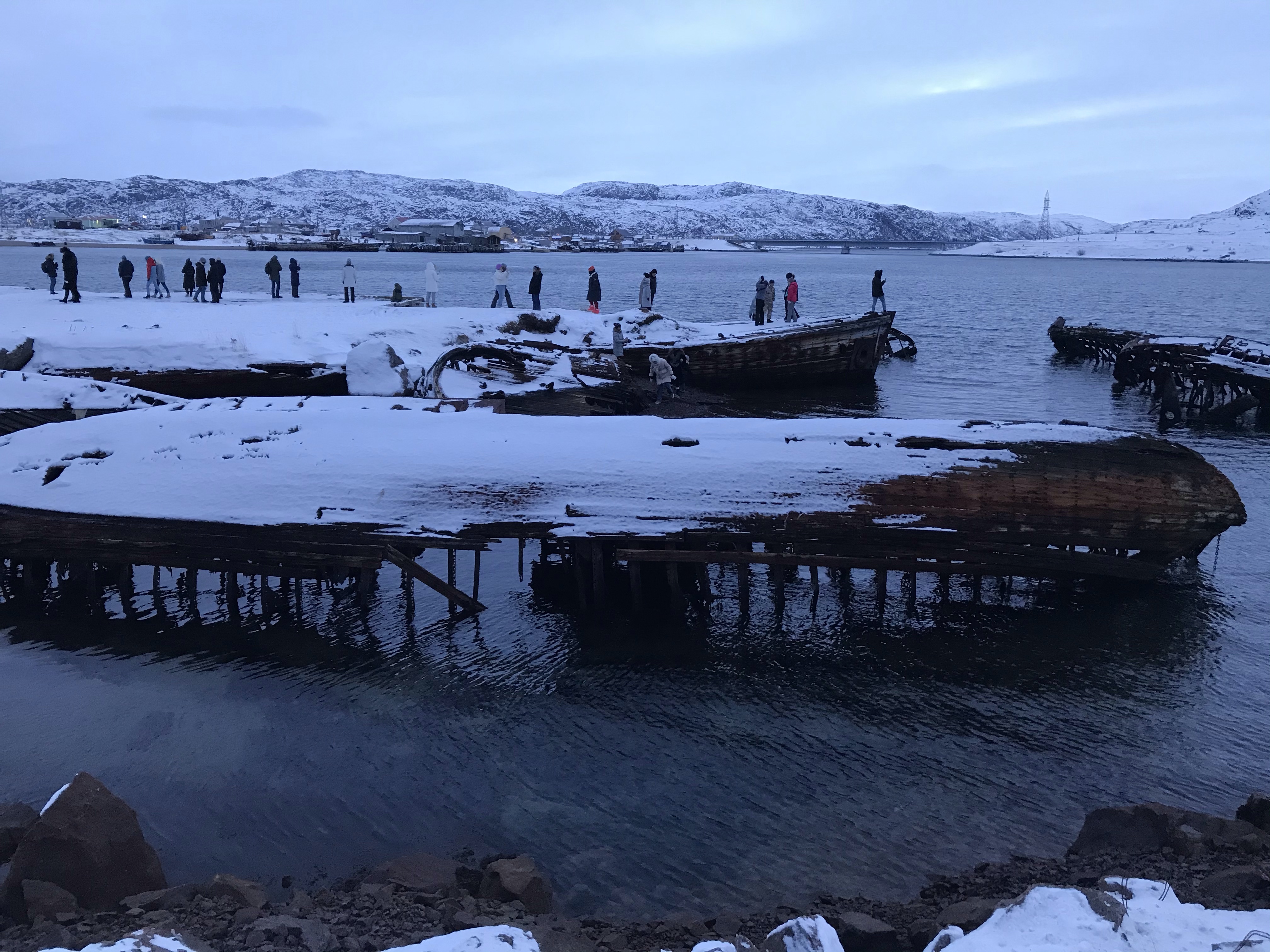
Ship Cemetery 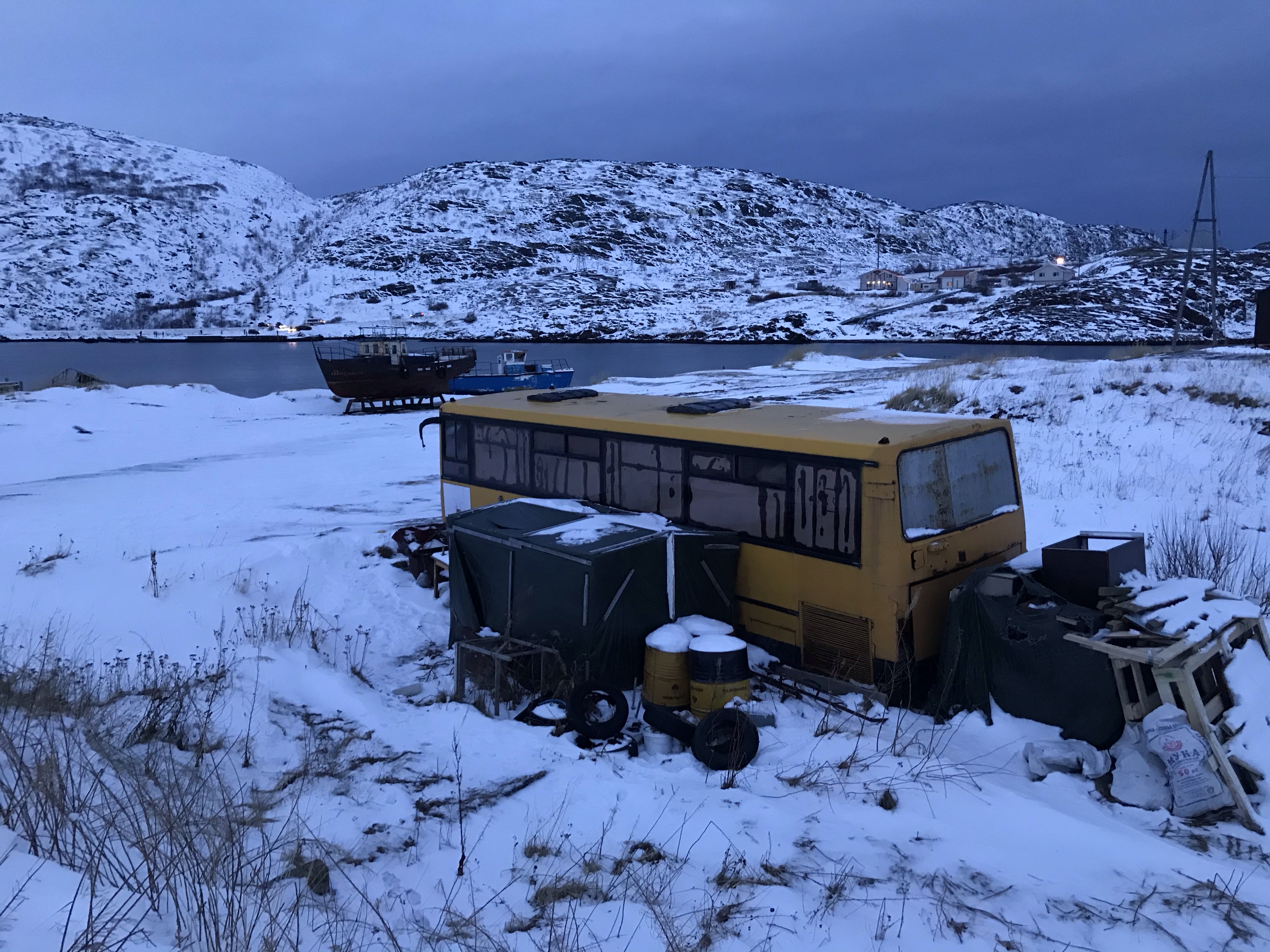
Improvised summer accommodation 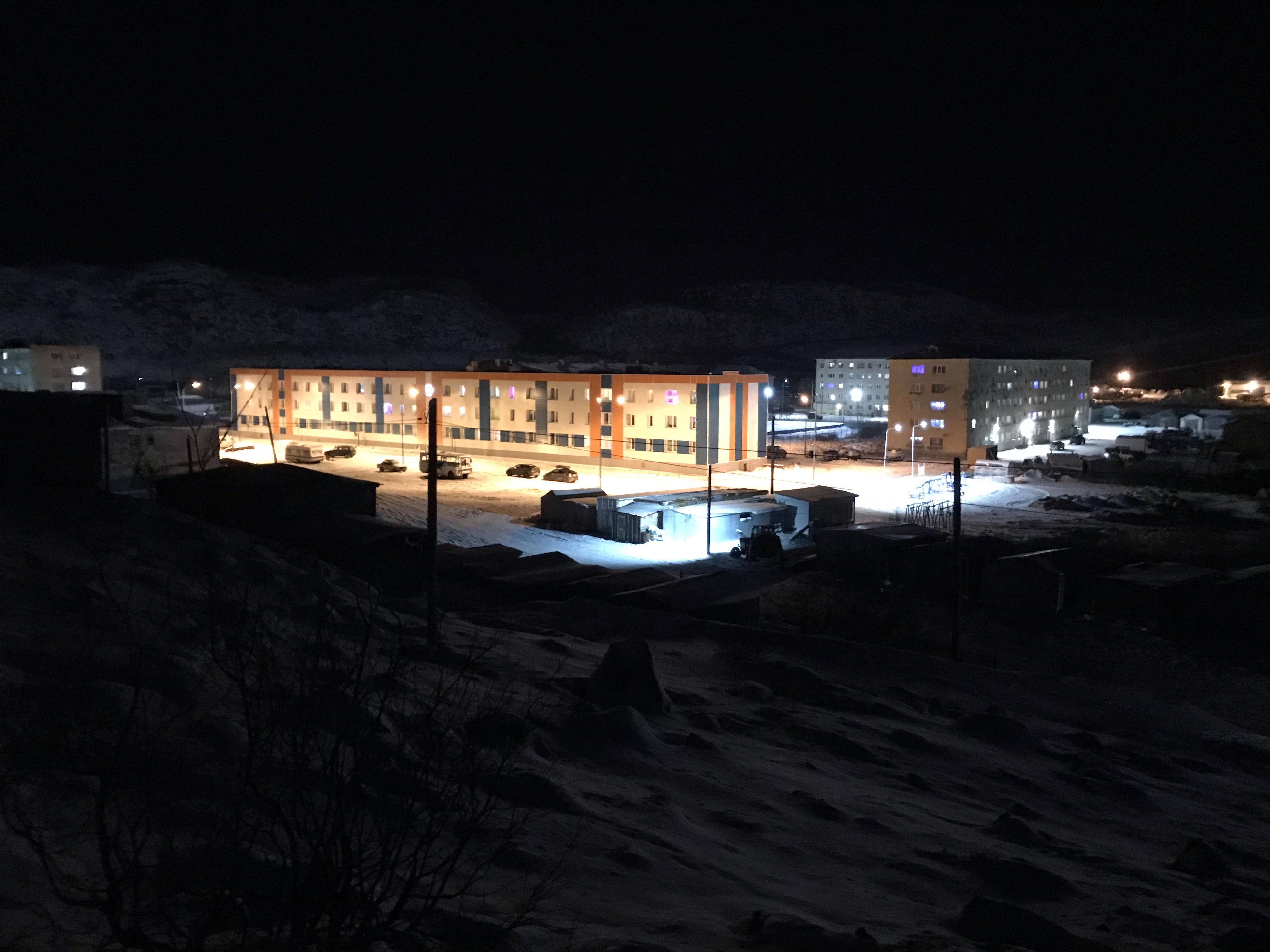
Teriberka, view from above

 no.balsa