

The site is located to the south east from Weston-super-Mare’s historic centre, alongside the A370 and the Weston bypass railway. In the site’s proximity there are no buildings that are listed or have a historic value, although there are some tree preservation orders near to the site.
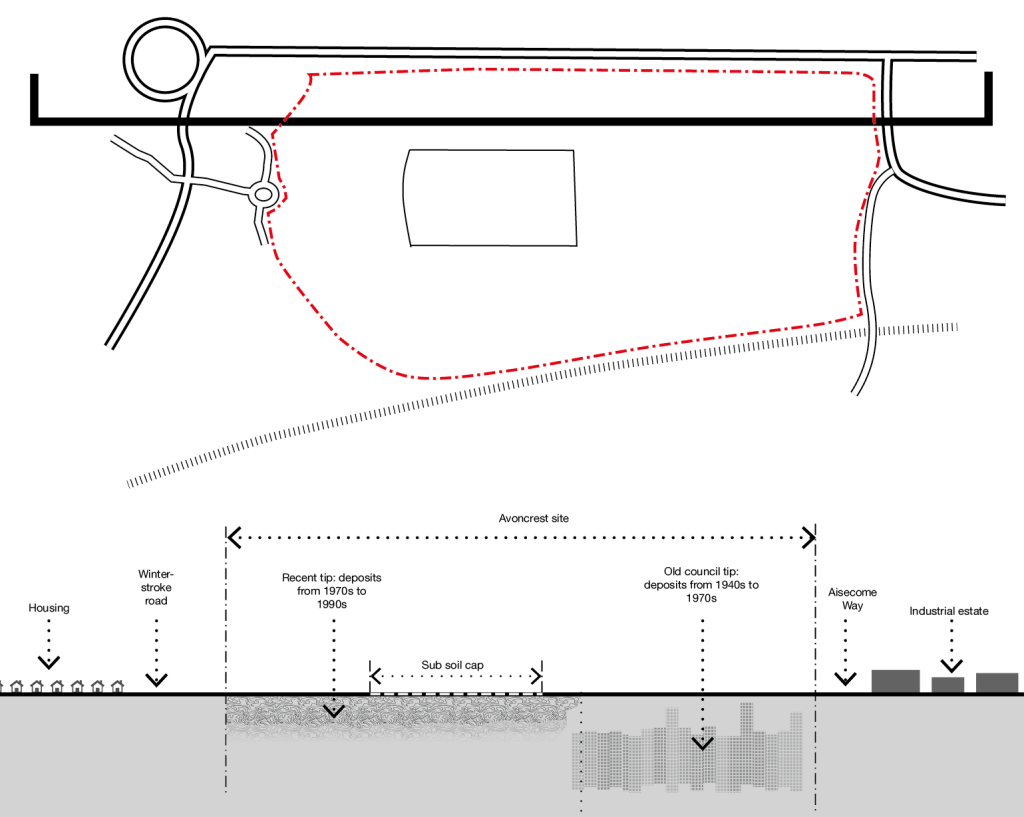
The site is widely known as the ‘former tip’ because of the solid waste that was deposited there between 1960s and 1980s. .Based on interviews with the local residents and on correspondence with the Environmental Agency, it is believed that solid waste deposits in the ground are distributed as shown in figure 2, however this information is subject to intrusive ground surveys and tests.

Following the tipping activities there has been an unsuccessful attempt to adapt the site for a golf course (application ref. 0209/89). In its Prospectus for Change from 2015, North Somerset Council identified the site as a potential area for ‘new housing and commercial’, however in 2017 Avoncrest featured in the West of England One Front Door Programme as a site for potential remediation and extension of the Hutton Moore leisure centre’s facilities. Nevertheless, in the subsequent Site Allocations Plan from 2018 North Somerset council specified its expectation for 750 residential units and 2.5 hectares of employment land.
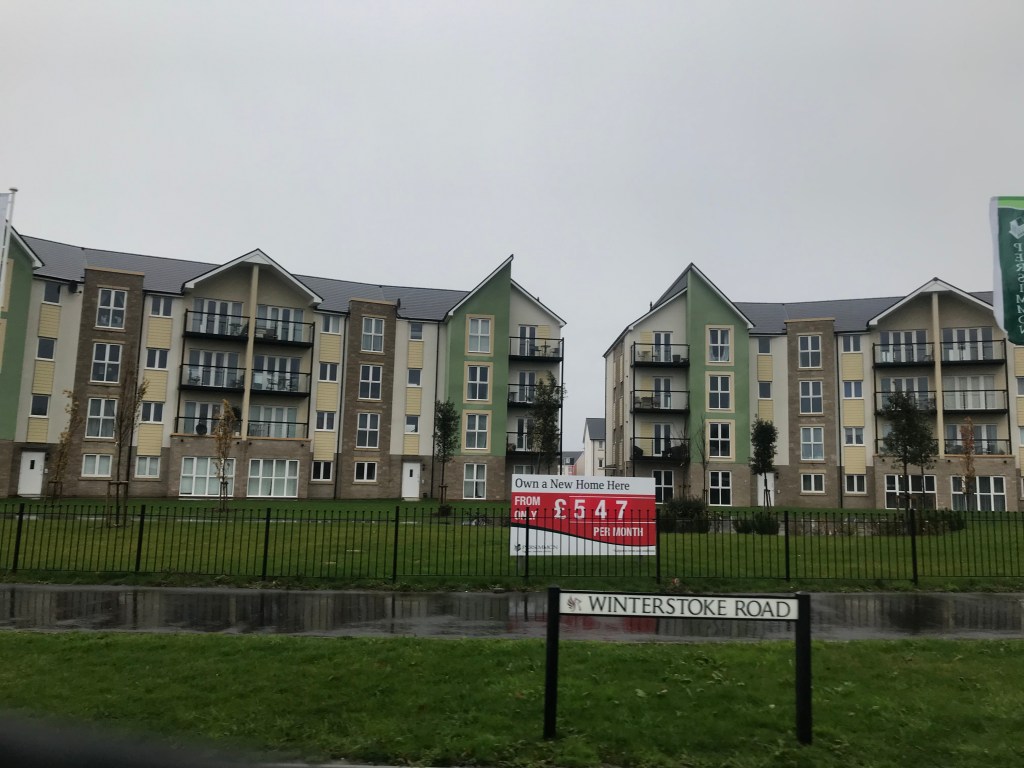
Amongst the current surrounding developments there are residential projects Haywood Village, Moor Parklands and Business Estate and Persimmon Homes, commercial developments the Hive, PD&CL offices, and the Foodworks Project, as well as new schools and the new Weston College Sixth Form building.
I am hoping to embark on a study identifying industrial and specifically waste management uses that could be proposed here in addition to the residential and commercial uses prescribed by the Site Allocations Plan. Relevant sustainability-driven functions could take advantage of the site’s former uses and help to unlock its potential for development. In particular, my focus would be on remediation, recovery, decontamination and waste processing activities that would go hand in hand with the construction of its primary elements. Rather than mechanically imposing new buildings and functions, the potential proposal should be based on a sensitive analysis of the site’s history and its ground condition. Such analysis would translate into the phasing, setting out and functionality of the proposed development, focused around circular economy, self-sufficiency and ground-regeneration.
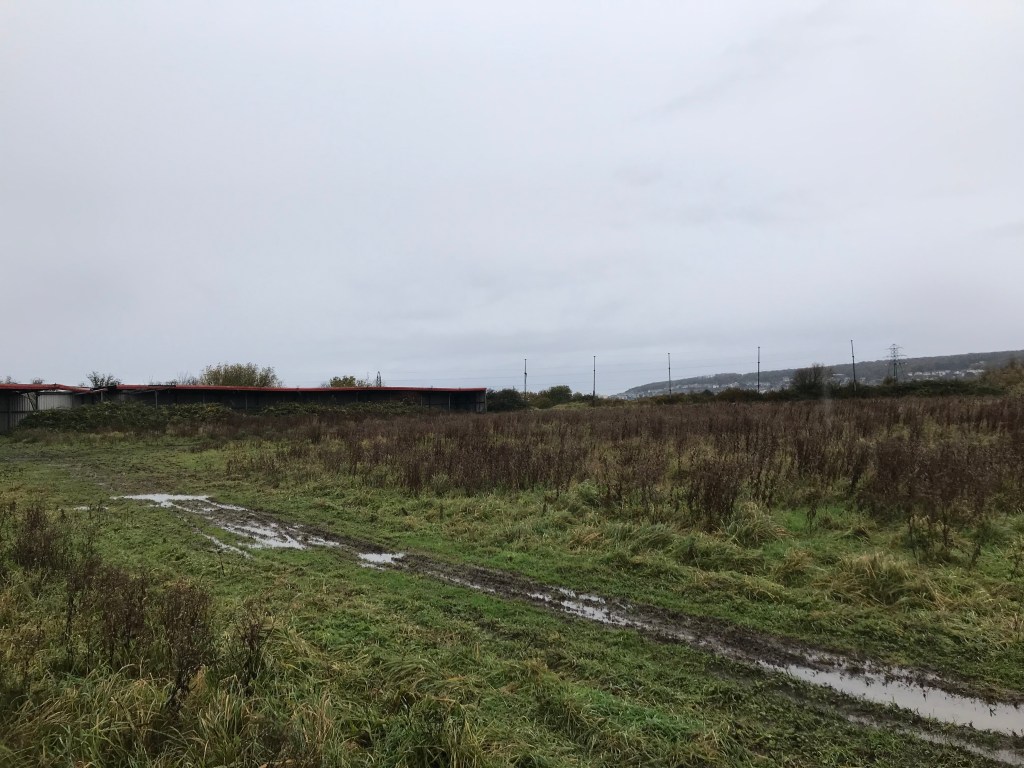
The proposal for a sustainable eco-park, integrated with commercial and residential uses, would aim to address the stagnant condition of this well connected and increasingly central location, placed within the dynamic context of the former Weston airfield. An image of the site is shown below.

 no.balsa